Design Origins: The Panther
By 1997, Tinker Hatfield had been designing Air Jordans for nearly a decade, and each new model needed a fresh source of inspiration. For the thirteenth signature shoe he found it in the animal kingdom. Watching Michael Jordan on court, the explosive first step, the low stalking of defenders and the sudden pounce towards the basket, reminded Hatfield of a black panther. That connection became the foundation for the entire shoe.
Updated October 2026
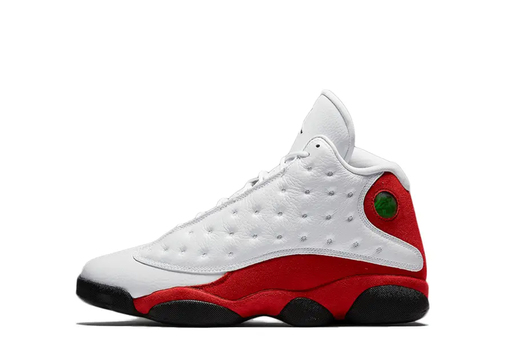
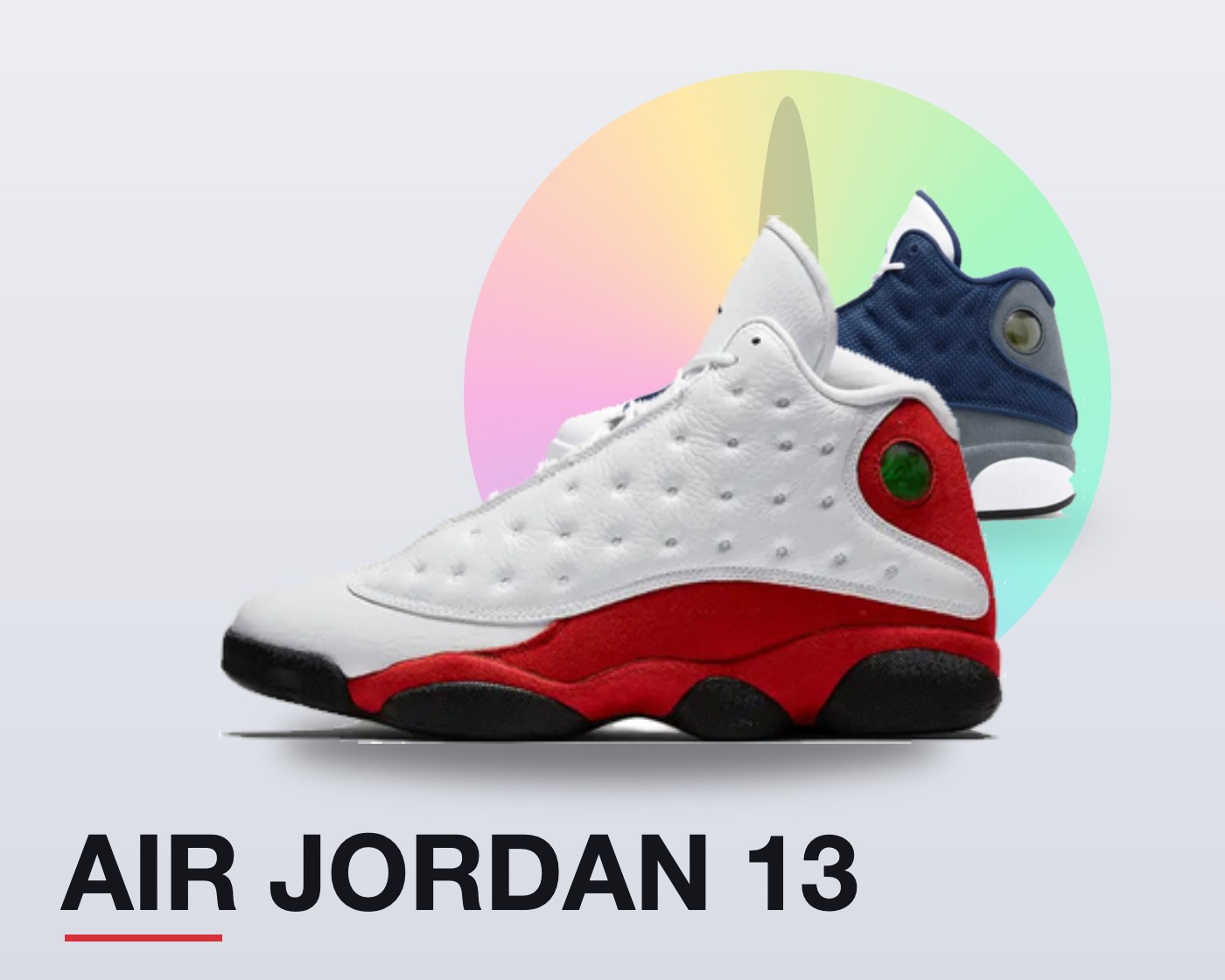
The panther influence shows in every detail. The segmented outsole mirrors a panther's paw, with separate pods for grip in every direction. On the heel, a holographic disc shifts colour depending on the angle, a nod to the eye of a cat at night. The upper pairs dimpled leather with suede panels that wrap from the midfoot around the heel like a body in motion. Nothing on the Air Jordan 13 was accidental. Every element traces back to Hatfield's picture of Jordan as the apex predator on court.
On-Court Legacy: The Last Dance Season
The Air Jordan 13 arrived at the perfect moment. The 1997/98 NBA season would be Michael Jordan's last with the Chicago Bulls, a campaign now remembered as one of the greatest in basketball history. Jordan wore the 13 through most of that year, including the 1998 All-Star Game, where he was named MVP.
On court, the 13 gave Jordan what he needed. Zoom Air units in the heel and forefoot delivered responsive cushioning for his first step, while a Phylon midsole kept the shoe light and stable. The paw-pad outsole gripped the hardwood just as its design suggested. Jordan wore the black and red 13 deep into the 1998 playoffs before switching to the Air Jordan 14 for the Finals, where he hit the famous last shot in Game 6 to win his sixth title.
The Launch of Jordan Brand
The Air Jordan 13 also holds a special place for another reason: it was the first signature shoe released after Nike launched Jordan Brand as its own division in 1997. Jordan's line now had its own identity, structure and roster of athletes, and the 13 was the shoe that told the world Jordan Brand was more than a signature line inside Nike.
That step mattered. Jordan Brand went on to become one of the most valuable names in sportswear, with billions in annual revenue and athletes across several sports. It all started with the Air Jordan 13 on the shelves and the Jumpman standing on its own.
Key Colourways
The original Air Jordan 13 line-up came in high and low versions, each one matched to the shoe's panther-inspired design.
- Chicago: White leather with True Red suede, the cleanest of the originals. It returned on 14 March 2026 as the 'True Red', its first retro since 2017.
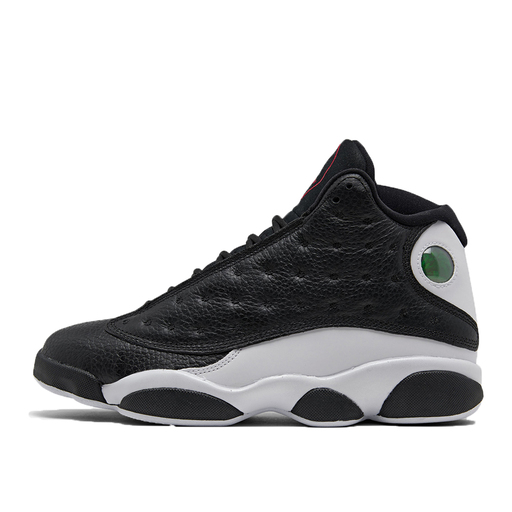
- He Got Game: White leather with a black suede mudguard and red accents. Denzel Washington wore it in Spike Lee's 1998 film He Got Game, which gave the colourway its name and a second life. The 2018 retro already has its page on KLEKT, and the Reverse He Got Game flipped the blocking in 2020.
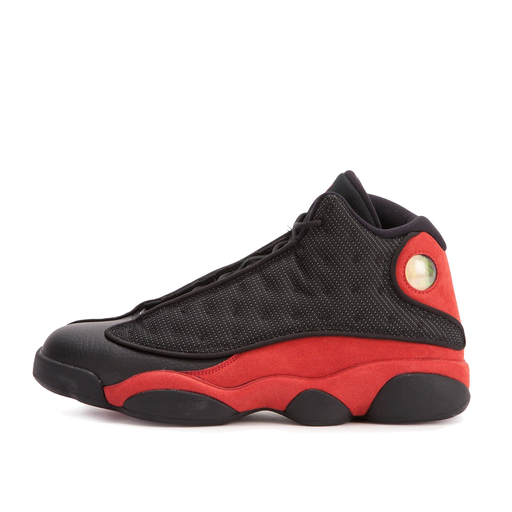
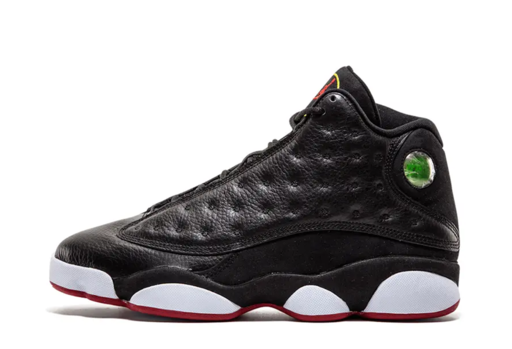
- Bred and Playoffs: Black with True Red, the pair Jordan wore in the 1998 playoffs. Both the 2017 Bred and the 2023 Playoffs brought the look back.
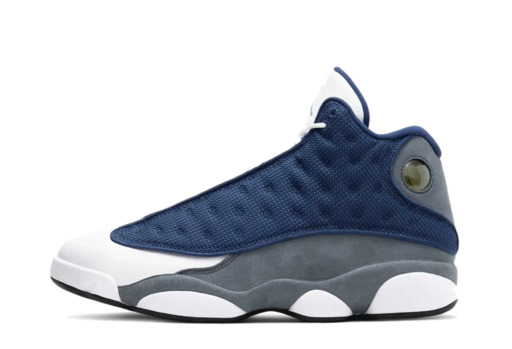
- Flint: Navy suede, Flint Grey and University Blue, a cooler alternative and one of the most requested retros. The 'Flint' returned on 1 August 2026 for its fifth retro.
Retros and New Colourways
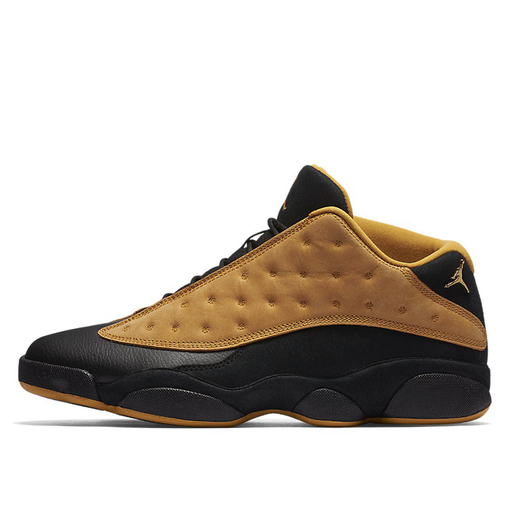
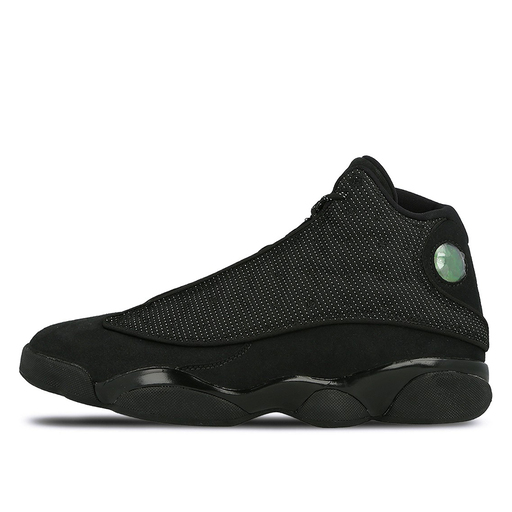
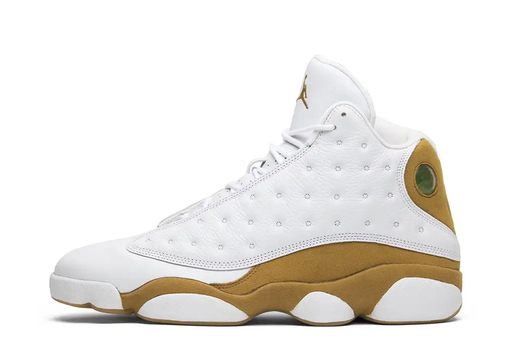
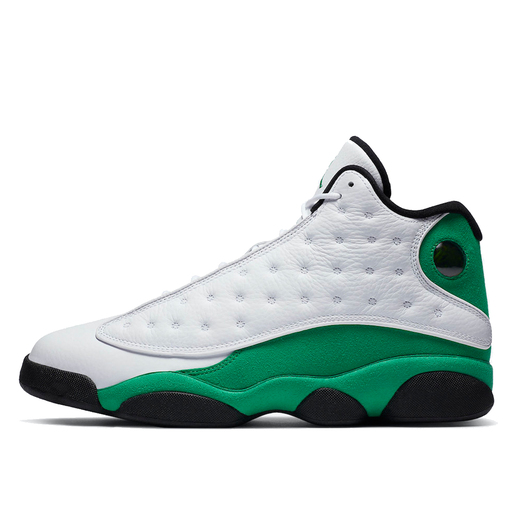
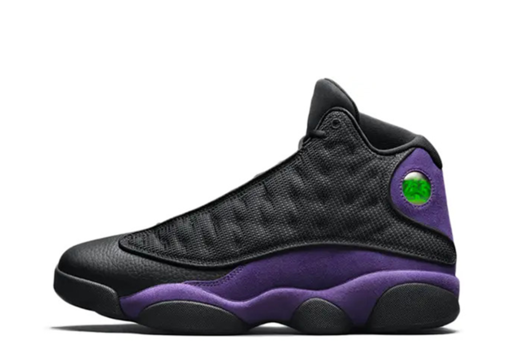
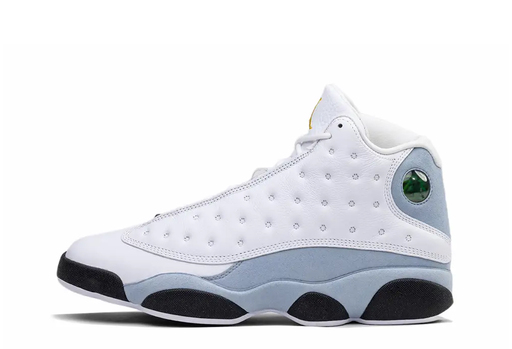
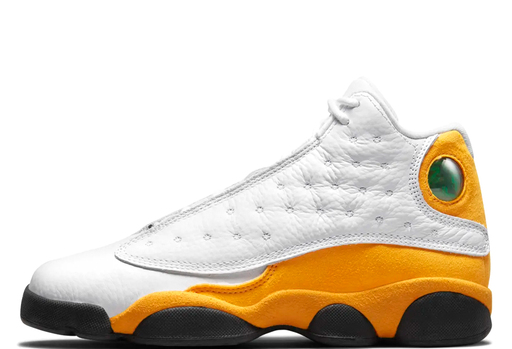
Away from the originals, Jordan Brand has used the 13 for dozens of new looks. The all-black 'Black Cat' leans fully into the panther story, the 'Lucky Green' and 'Court Purple' bring brighter colour, and the 'Wheat' and 'Del Sol' show how well the shape works with seasonal tones. Low-tops like the 'Chutney' keep the paw outsole in a shorter cut.

Cultural Impact
The Air Jordan 13 sits where sport, design and pop culture meet. It was the shoe of Jordan's final Bulls season, the first signature model after Jordan Brand became its own division, and the star of one of the defining basketball films of the 1990s. With a panther's paw on the sole and a holographic eye on the heel, it showed how far sneaker design could go.
Retros of the 13 consistently do well, with the Chicago, Flint and He Got Game creating demand every time they return. The shoe connects with collectors who lived through Jordan's last Bulls season and with younger fans who found the story through documentaries, films and the mythology of number 23.
Almost 30 years after its debut, the Air Jordan 13 remains a pillar of the Jordan catalogue and a favourite for anyone who values design storytelling as much as performance. Tinker Hatfield set out to capture a predator, and he did.
Browse every Air Jordan 13 on KLEKT.
Images: Nike / Jordan Brand / KLEKT