

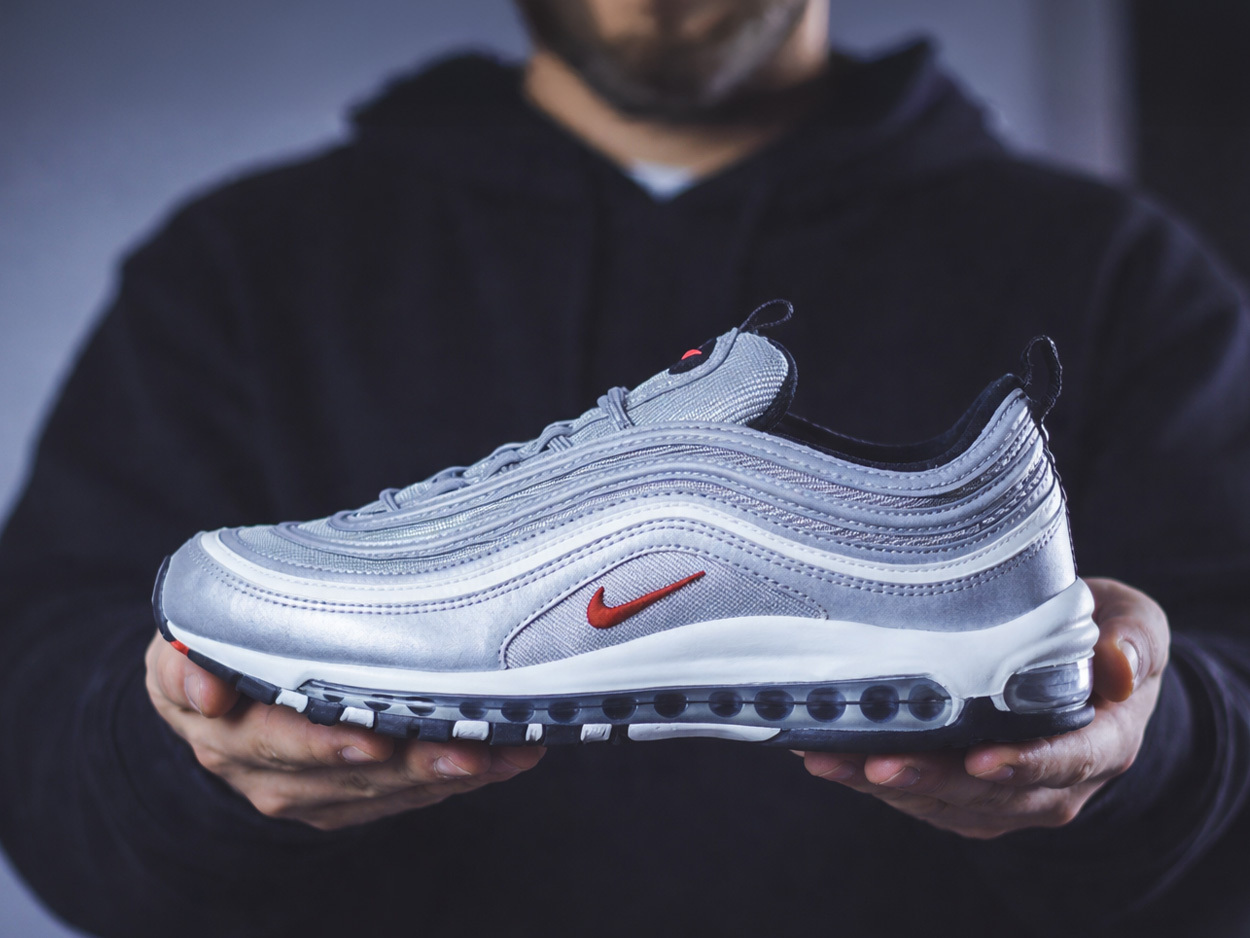
Few sneakers carry as much cultural weight as the Nike Air Max 97. Since its debut nearly three decades ago, it has gone from a technical running shoe to a global style icon worn by celebrities, adopted by subcultures across continents, and reimagined through some of the most coveted collaborations in sneaker history. So how did it all begin?
The Design Behind the ‘Silver Bullet’
The Air Max 97 was designed by Christian Tresser, a young designer who joined Nike around 1996 after a stint at Reebok. When Tresser received the Air Max brief, the pressure was immense. But Tresser didn’t blow it. He created one of the most instantly recognisable silhouettes ever made.
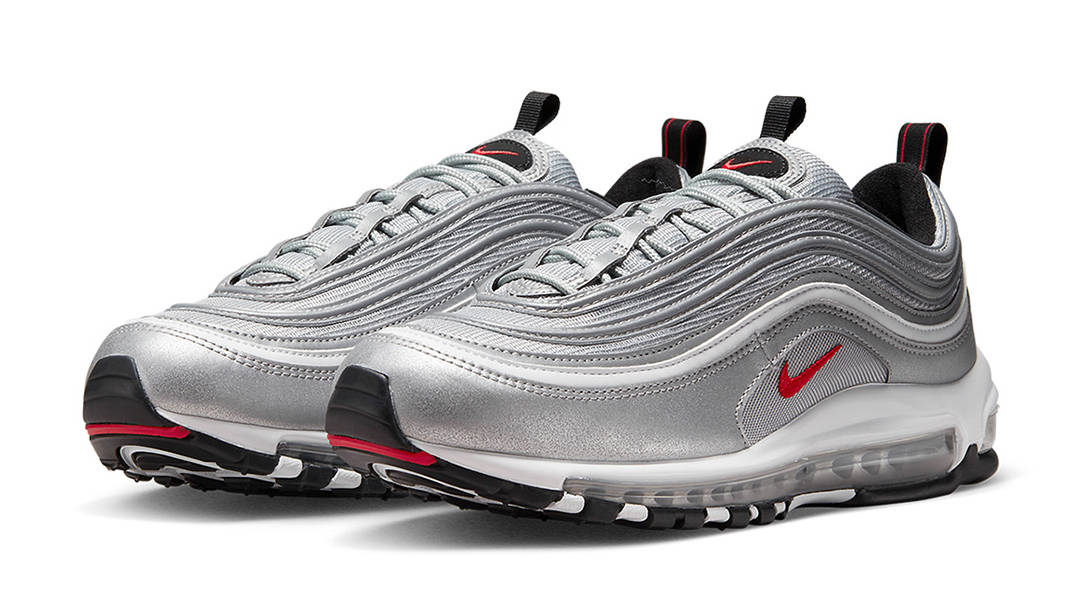
You may have heard that the shoe was inspired by Japan’s bullet trains. That story stuck around for years, partly because it makes for a tidy piece of brand mythology. But Tresser himself has been clear on the real sources. As Nike states on its own archives page, his inspiration came from nature – specifically, the ripples created when a water drop falls into a pond. “Water would drop and radiate out to the Air unit,” Tresser explained. The shoe’s flowing wave lines trace directly back to that idea.
As for the metallic finish that earned the shoe its ‘Silver Bullet‘ nickname? That came from Tresser’s lifelong love of mountain biking. The silver reflective piping on the upper was a direct nod to that world. The Japanese bullet train narrative arrived later, a piece of Nike storytelling that gained traction over time.
A Technological Milestone
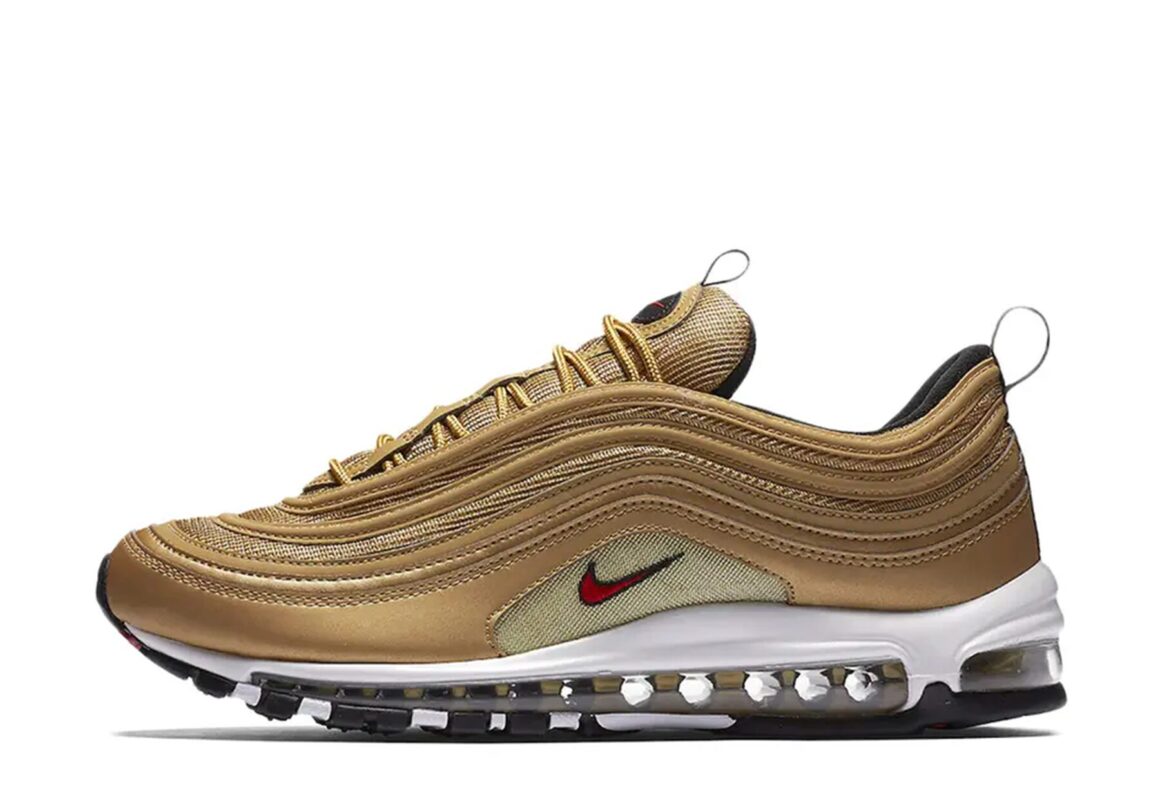
Beyond the aesthetics, the Air Max 97 made history underfoot. It was the first Nike shoe to feature a full-length visible Air unit, a development that had been years in the making. Visible Air cushioning had been evolving since the Air Max 1 introduced the concept in 1987. The Air Max 180 expanded the window, and the Air Max 93 introduced blow-moulding to the process.
Full-length visibility only became a reality in 1997, with the 97 as its launch pad. The full-length Total Air unit was a genuine leap forward, and it set the standard for Nike’s Air Max line for years to come.
Italy and ‘Le Silver’
Ask any serious Air Max collector about the cultural home of the 97, and the answer is almost always Italy. The shoe landed in Italian stores in the late 1990s and quickly developed a devoted following unlike anything seen in most other markets. Rome’s graffiti crews latched onto the reflective 3M detailing, appreciating how the lines caught the flash of a camera in front of freshly painted walls. Club culture embraced the shine. Then, early appearances on the Armani catwalk and at a Dolce & Gabbana show in 1998 elevated the shoe from street-level favourite to something approaching a national obsession.
Italians nicknamed it ‘Le Silver‘. The moniker swept through Rome and Naples before spreading to smaller towns across the country. Milanese writer Lodovico Pignatti Morano later published Le Silver: An Italian Oral History of the Nike Air Max 97, a 150-page volume originally commissioned as a Nike report to understand the shoe’s extraordinary popularity in Italy during the late 1990s and early 2000s.
The cultural love ran so deep that for the 97’s 10th anniversary, Nike created dedicated editions sold in Italy and in NikeTown locations that attracted significant Italian tourist footfall. Then, for the 20th anniversary in 2017, the ‘Silver Bullet’ colourway returned globally, with Italian-market special editions leading the charge.
Celebrity Endorsements and Pop Culture
Italy wasn’t the only place where the 97 found an enthusiastic audience. In the UK, Alexander McQueen was photographed wearing the shoe. Vogue ran a profile in 1998 featuring Garbage vocalist Shirley Manson in her silvers. Mel C of the Spice Girls wore the shoe consistently throughout the late 1990s, pushing it to a massive young audience through the Spice Girls’ global fanbase.
On the athletic side, Nike enlisted sprinting legend Carl Lewis and 200m gold medallist Michael Johnson for advertising campaigns. Johnson’s association with metallic Nike design, following his bespoke gold sprint spikes at the 1996 Atlanta Olympics, made him a natural fit for the 97’s silver aesthetic.
Key Collaborations
The Air Max 97 spent its early years as a relatively quiet canvas for collaboration, but the partnerships that have followed have been genuinely impactful.
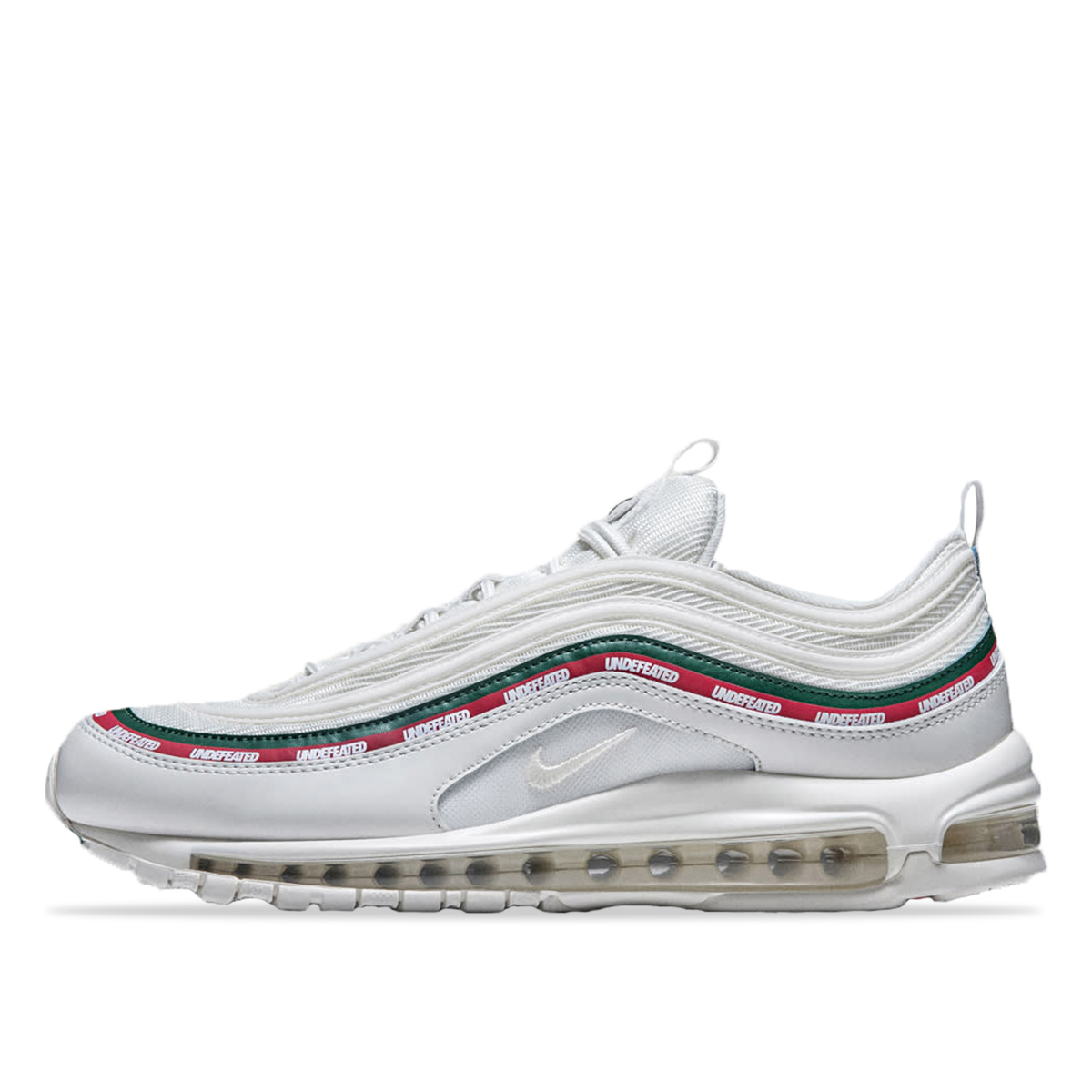
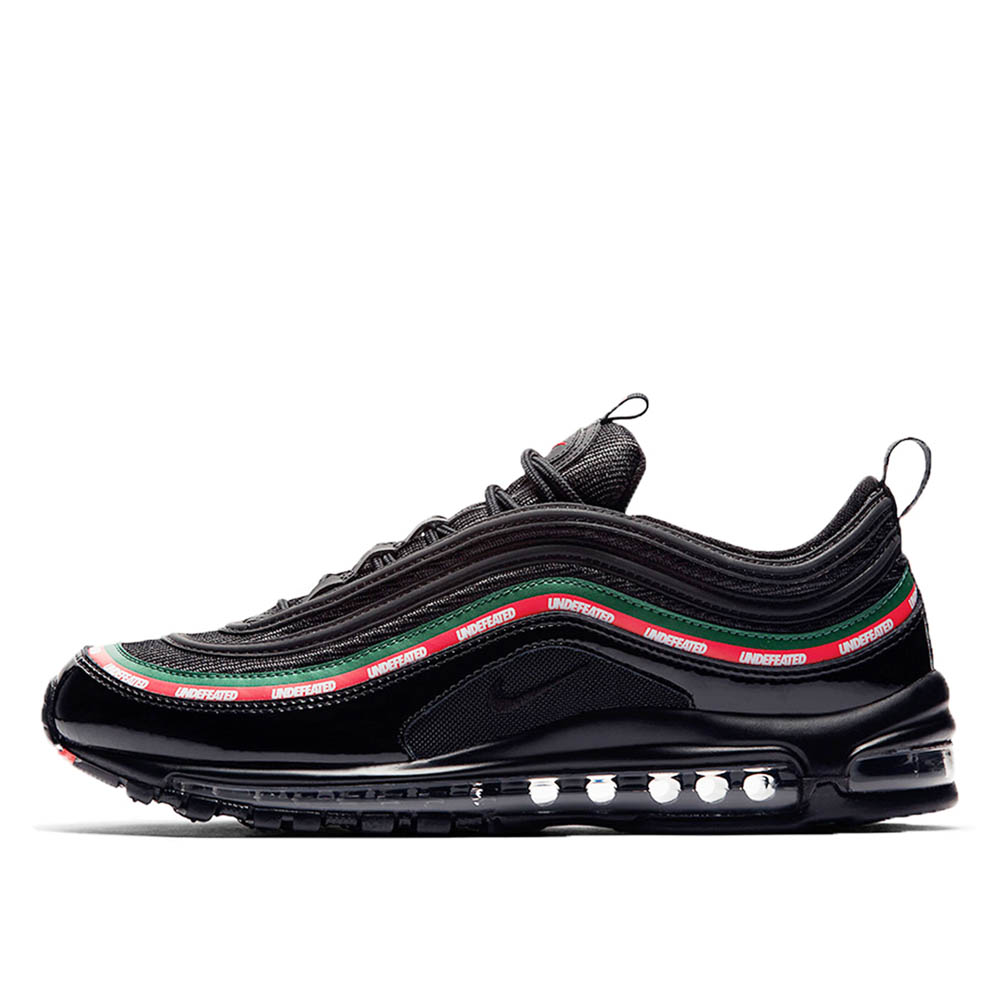
To celebrate the 20th anniversary of the Air Max 97, LA-based sportswear brand UNDEFEATED (UNDFTD) released a highly coveted collaboration in two colourways. The shoes feature UNDFTD branding alongside a mix of patent leather, foam and full-length visible Air. One colourway used a black upper with a red and green panel widely read as a nod to the Italian flag, a fitting tribute given Italy’s connection to the silhouette.
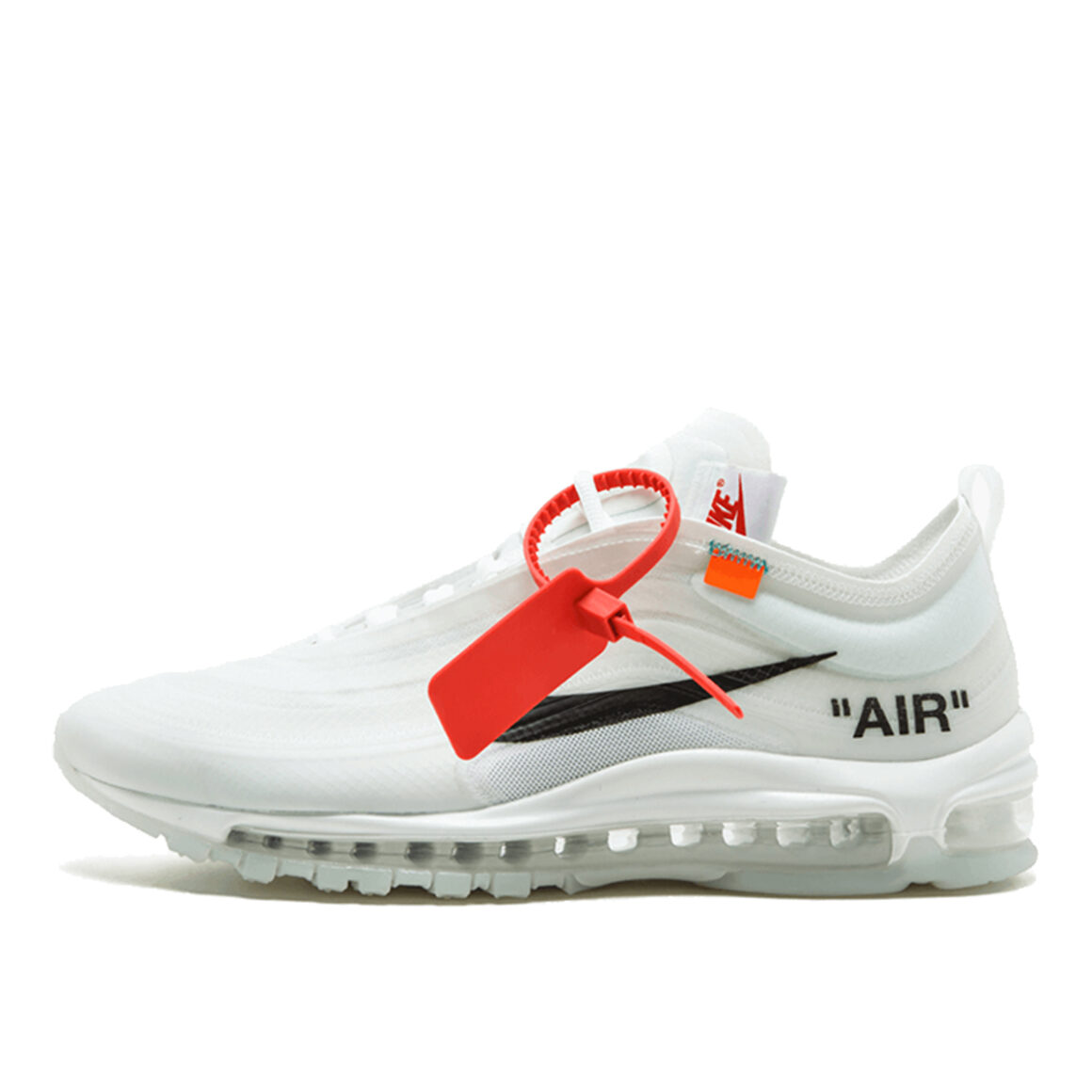
Also in 2017, Virgil Abloh included the Air Max 97 in his landmark ‘The Ten’ collection with Nike, a project that reinterpreted 10 classic Nike silhouettes. The Air Max 97 was placed in the “Ghosting” category, a group of five shoes designed with translucent uppers. The result featured a reconstructed semi-transparent upper, a red zip-tie, black trim, green lace tips and a translucent outsole. It remains one of the most discussed pieces from the entire collection.
Sean Wotherspoon x Air Max 97/1 (2018)
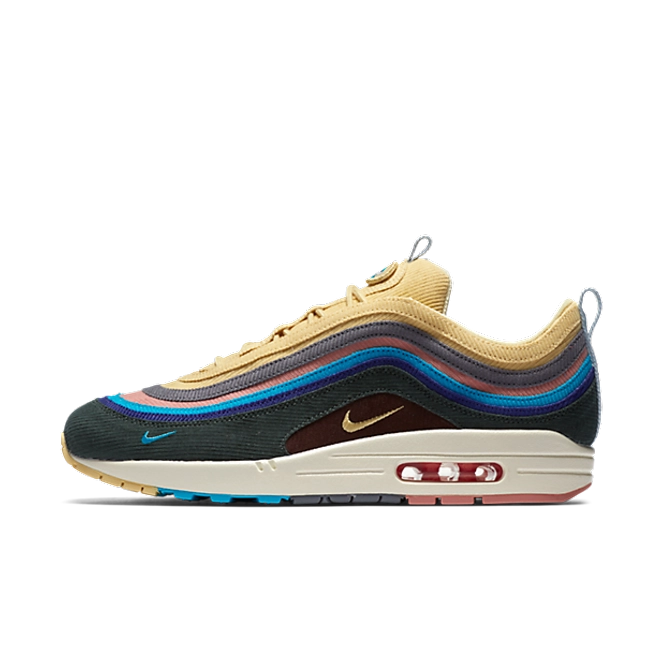
Sean Wotherspoon’s design won Nike’s RevolutionAir Design contest at Air Max Day 2017, and the full release followed on 26th March 2018. The shoe fused an Air Max 97 upper with an Air Max 1 sole unit, finished in a retro colour palette with corduroy racing stripes. Velcro tongue tabs allowed wearers to swap between a Swoosh logo or a wave design. The release was one of the most anticipated drops of any Air Max Day, and remains highly sought-after today.
Why the Air Max 97 Keeps Coming Back
The Air Max 97 was only on shelves for a short initial run before being superseded by the Air Max 98 in spring 1998. Yet the silhouette has proven remarkably resilient. From the early 2013 reissue of the original silver colourway, through its 20th and 25th anniversary celebrations, to a continued stream of collaborative and general releases, the shoe keeps finding new audiences without losing its core identity.
Part of that durability lies in its design versatility. The wavy upper structure and full-length Air unit translate across colourways and materials without ever looking out of place. Part of it lies in the genuine subculture history baked into the shoe’s DNA. And part of it is simply the fact that Christian Tresser designed something that still looks progressive nearly 30 years later.
The Air Max 97’s Legacy
The Air Max 97 represents a pivotal point in Nike’s history. Its full-length visible Air unit paved the way for decades of cushioning innovation, from the Air Max 360 to the Air Max 720. Its silhouette helped define what a premium running shoe could look like at the end of the 1990s. And its cultural adoption across Italy, the UK and beyond proved that a running shoe’s story doesn’t always follow the path its creators intended.
Whether you’re picking up a pair of the OG ‘Silver Bullet’, hunting down a hard-to-find collaboration or exploring one of the newer general release colourways, the Air Max 97 continues to deliver.
Check out the full range of Air Max 97s available on KLEKT