

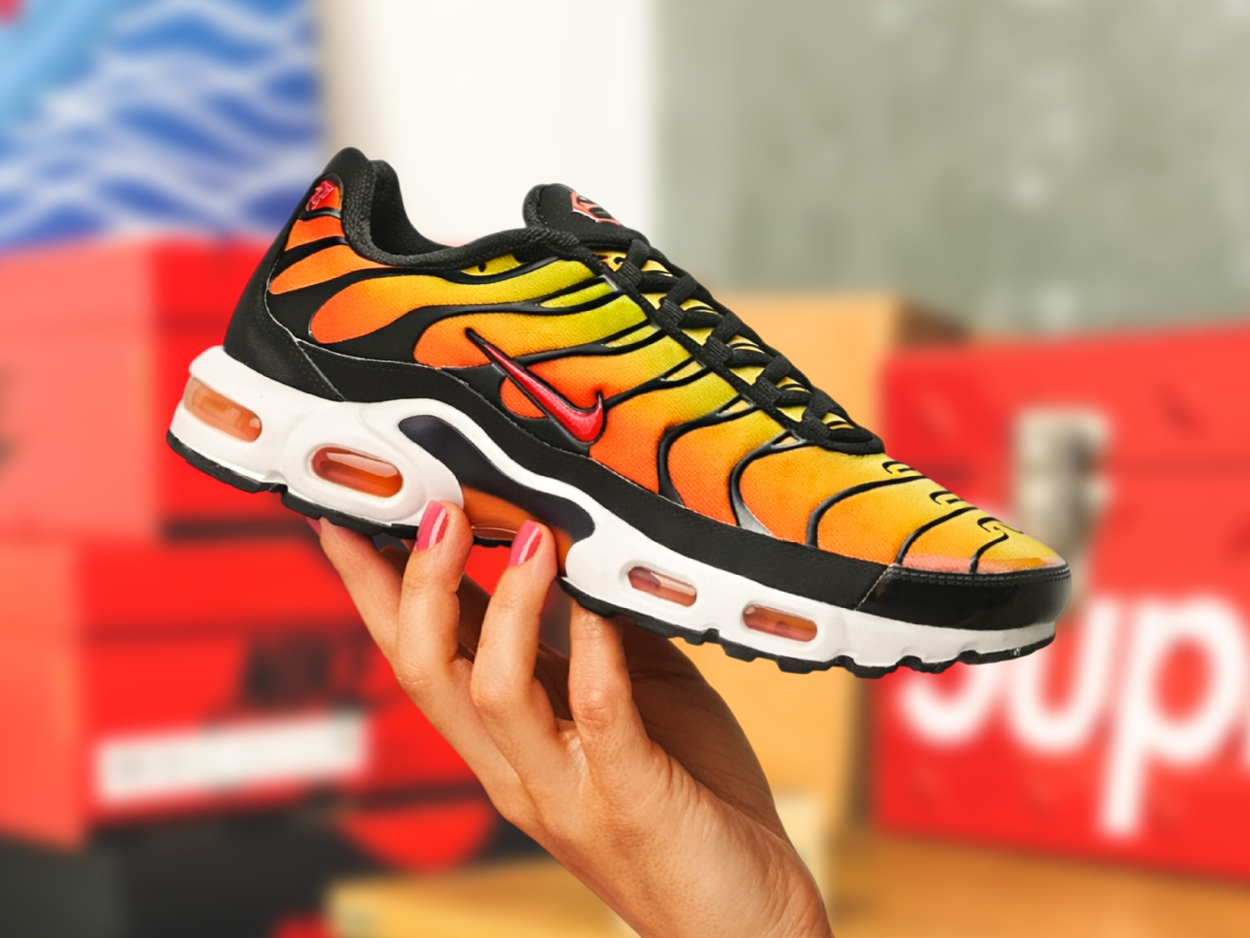
Few sneakers carry as much cultural weight as the Nike Air Max Plus. Known simply as the TN, it’s a shoe that has defied the odds at every turn. Too bold for the mainstream when it launched in 1998, then adopted by subcultures across the globe, and now firmly cemented as one of Nike’s most enduring silhouettes. Over two and a half decades on Foot Locker shelves, and still going strong.
So how did a Foot Locker-exclusive runner become the unofficial shoe of Australian street culture, a canvas for Supreme and A-COLD-WALL*, and one of the most recognisable silhouettes in sneaker history? Here’s the full story.
Palm Trees, Sunsets, and a Rookie Designer
The Nike TN was born out of a 1997 project called Sky Air, a Foot Locker exclusive initiative built around Nike’s brand-new Tuned Air cushioning technology. Nike presented over 15 design proposals before one finally landed. That winning design came from Sean McDowell – a Nike rookie on what was essentially his first real assignment.
McDowell’s inspiration came from a holiday memory. Watching the sky turn from deep blue to dusk, with palm trees swaying in the Florida breeze, he sketched what would become one of the most recognisable uppers in sneaker history, the TN’s signature gradient.
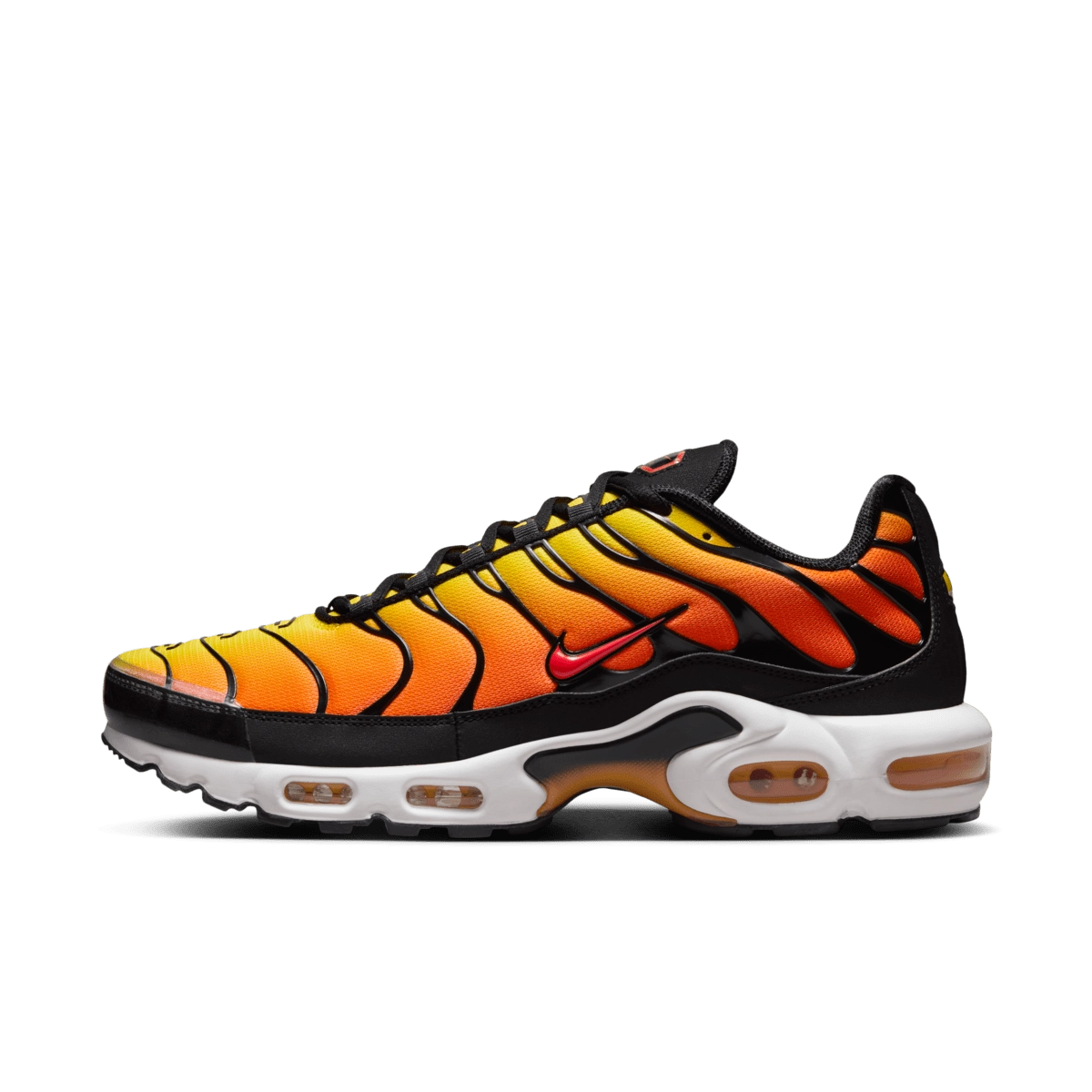
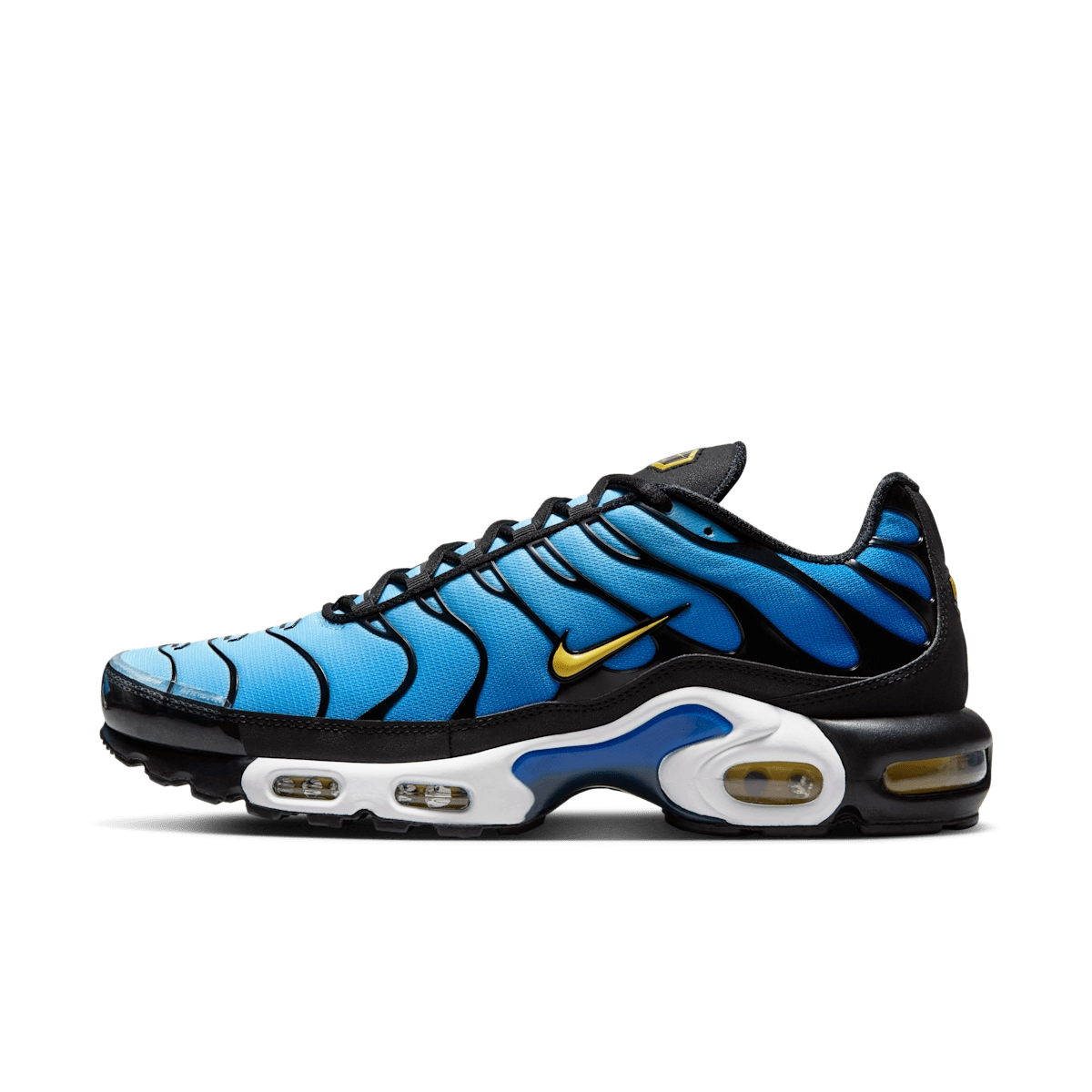
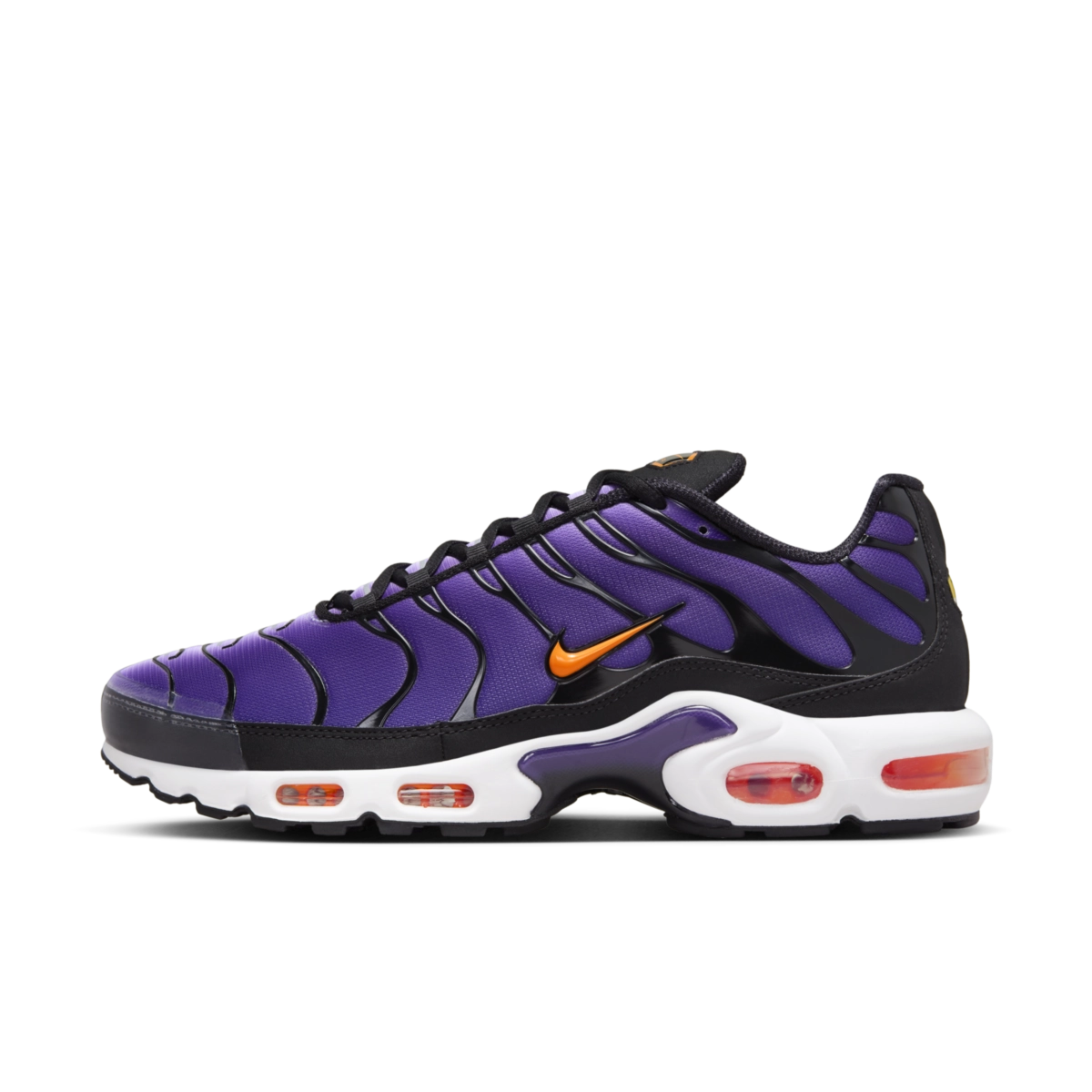
The rest of the design followed a similarly inventive logic. The shank – the piece that separates the front and rear Air units – modelled on a whale’s tail. Reflective detailing was placed on the tongue and toe box rather than the heel, a deliberate challenge to the conventional running shoe formula (McDowell noted that if you’re running facing traffic, reflective elements belong at the front). Even the Swoosh was slightly off-brief: slimmer and longer than standard, freestyled because no one had shown the new designer the official guidelines yet.
The TN logo itself – the yellow and black hexagonal badge on the heel – was added almost reluctantly. McDowell’s original sketches left it out entirely, but Nike insisted it be featured prominently. He placed it at the back of the heel, where it has since become one of the shoe’s most iconic details.
Engineering Breakthroughs (and Manufacturing Headaches)
Getting the TN into production was no smooth ride. The signature gradient upper – that spray-faded effect running from light to dark – was initially considered impossible. McDowell pushed for sublimation printing, borrowing the technique from apparel. The first sample was perfect.
The external skeleton presented a different challenge altogether. McDowell’s original vision called for thin welded TPU, but upon arriving at the factory in Asia, he was told the upper was too large to weld in one piece. It would either melt the fabric or fail to bond entirely. The solution? Split the skeleton into three sections and weld each part separately.
The sole unit was equally groundbreaking. Rather than simply maximising the Air Unit’s size, the Tuned Air technology divided cushioning into two distinct hemispheres—one tuned for comfort, one for efficiency. It was the most technically advanced sole Nike had produced at that point, and it gave the shoe its full name: the Air Max Plus Tuned 1.
The TN and Australia: A Cultural Love Story
When the Air Max Plus launched in 1998, it was initially met with mixed reactions. Too aggressive-looking for the average consumer, too expensive for most. For a while, pairs just sat on shelves.
Then something shifted. The shoe began finding its way to the feet of an eclectic crew—ravers, graffiti artists, gym regulars, and the occasional adventurous professional. But it was in the outer suburbs of Sydney, particularly Greater Western Sydney, that the TN truly found its people. The shoe’s bold, uncompromising aesthetic resonated deeply with communities who wore it with pride, and Foot Locker stores across Western Sydney consistently recorded some of the highest TN sales in the country. By the mid-2000s, the TN had become embedded in Australian street culture. The shoe wasn’t just footwear, it was a statement of identity.
The turning point for the broader mainstream came around 2013, the TN’s 15th anniversary year. Foot Locker reissued the original ‘Sunset’ and ‘Hyper Blue’ colourways, and for the first time, sneaker blogs and fashion sites that had previously ignored the TN started posting it. Social media did the rest. The TN had crossed over—and it brought its entire cultural identity with it.
Key Collaborations
Part of what keeps the TN relevant decade after decade is Nike’s willingness to hand the silhouette over to bold creative voices. A few collaborations stand out.
Supreme (2020)
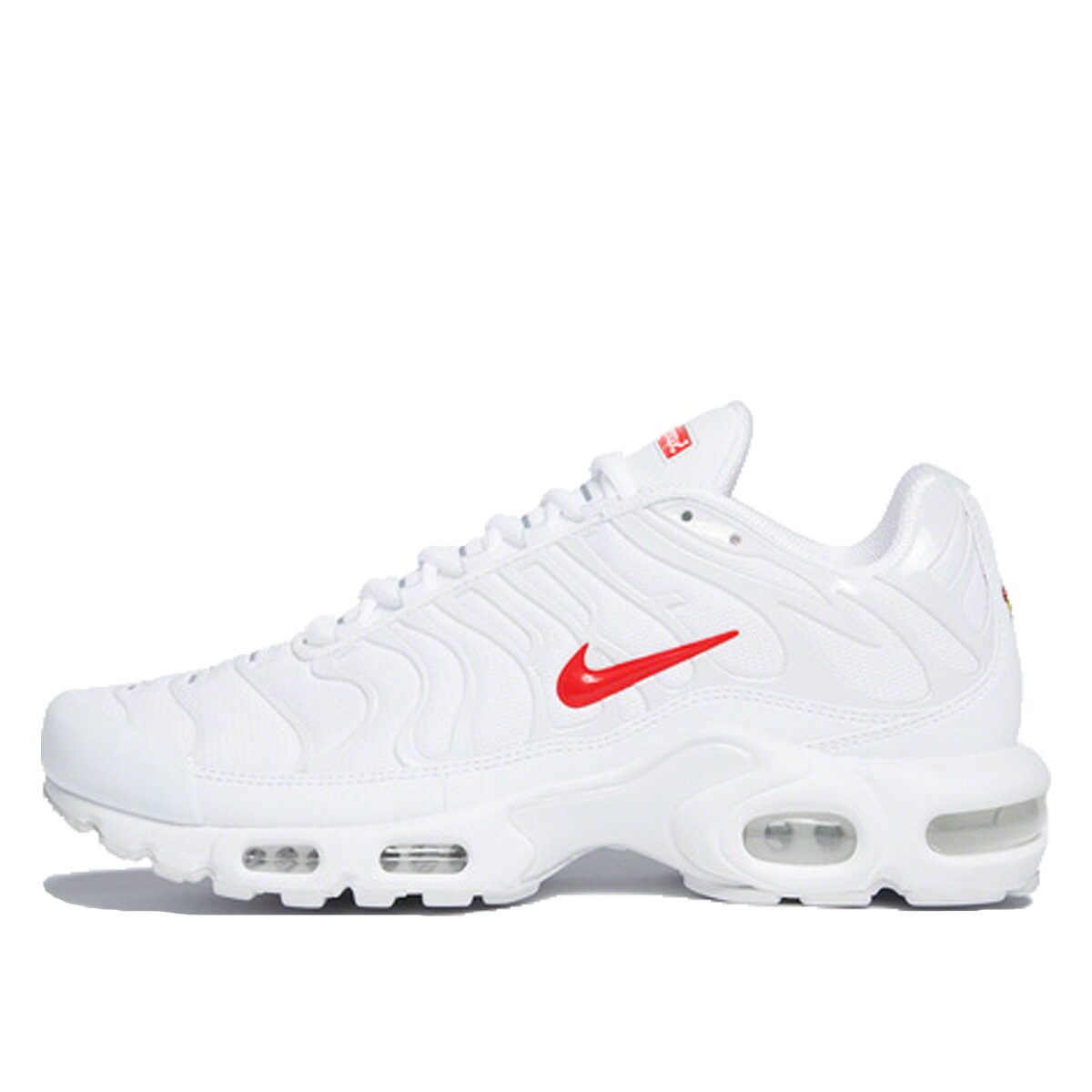
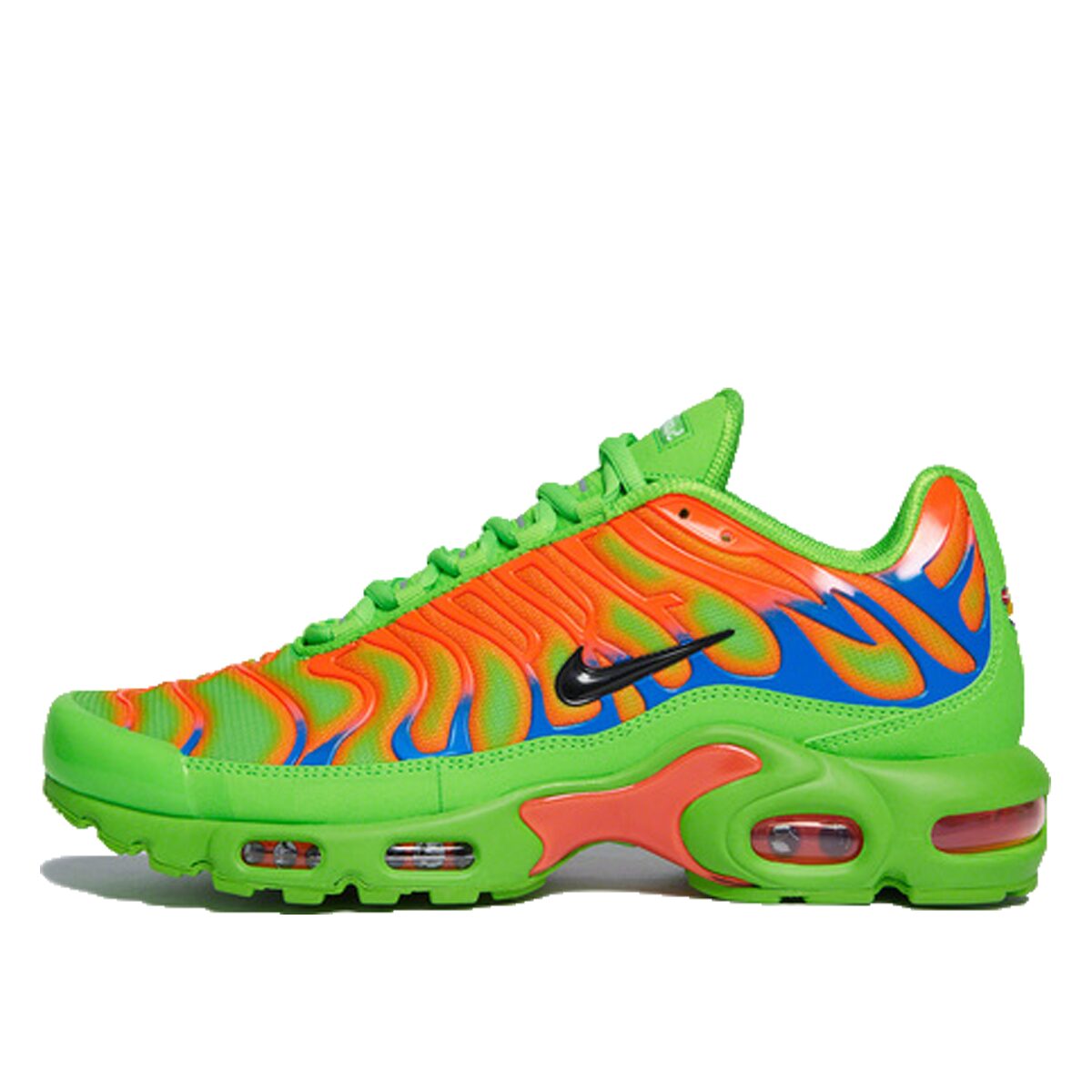
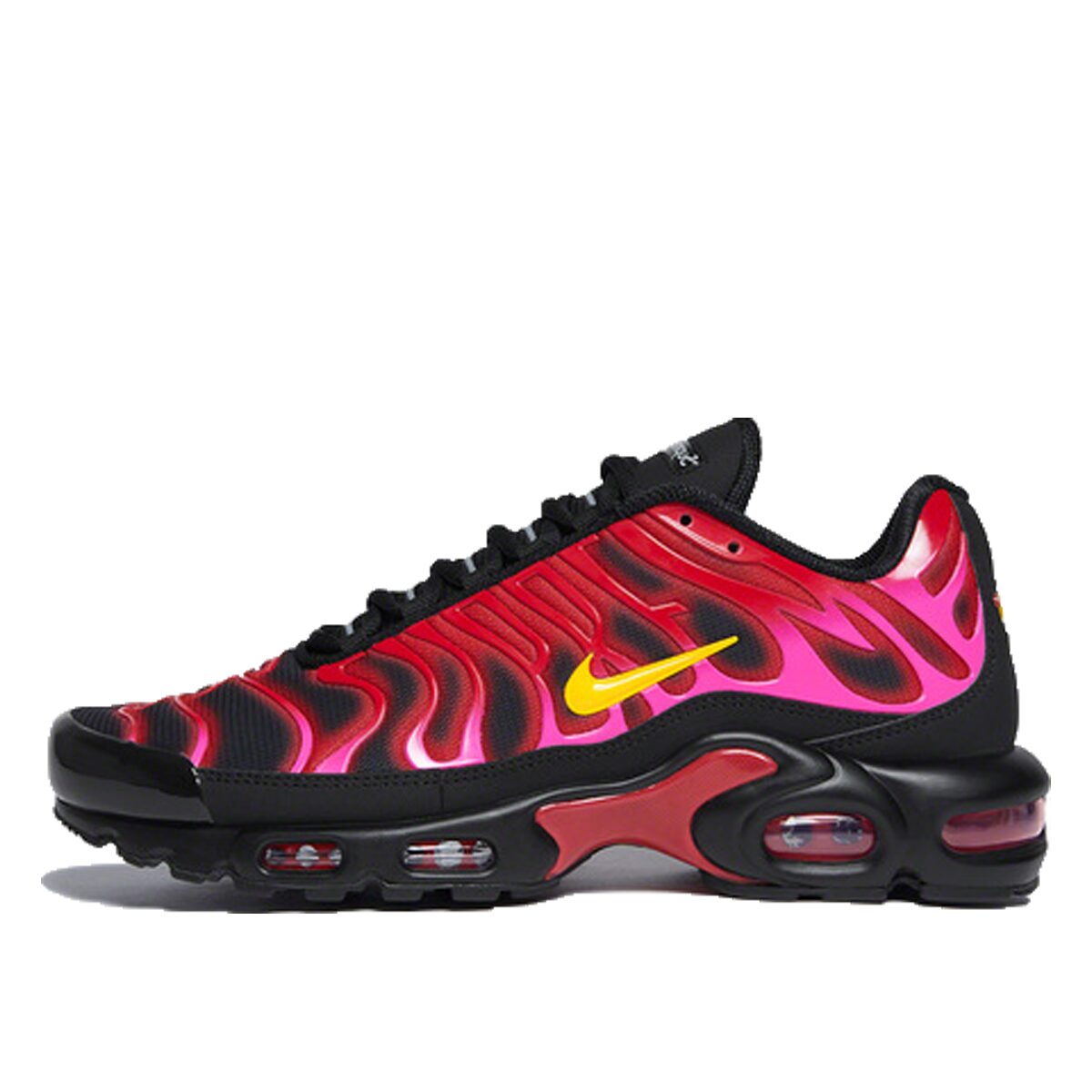
For their Fall/Winter 2020 collection, Supreme and Nike teamed up on a three-colourway Air Max Plus pack. The standout detail: the signature cage of the upper was reengineered to spell out “SUPREME” in full. Three colourways dropped, a clean white/red option alongside the louder ‘Mean Green’ and ‘Fire Pink’ pairs.
A-COLD-WALL* (2023)
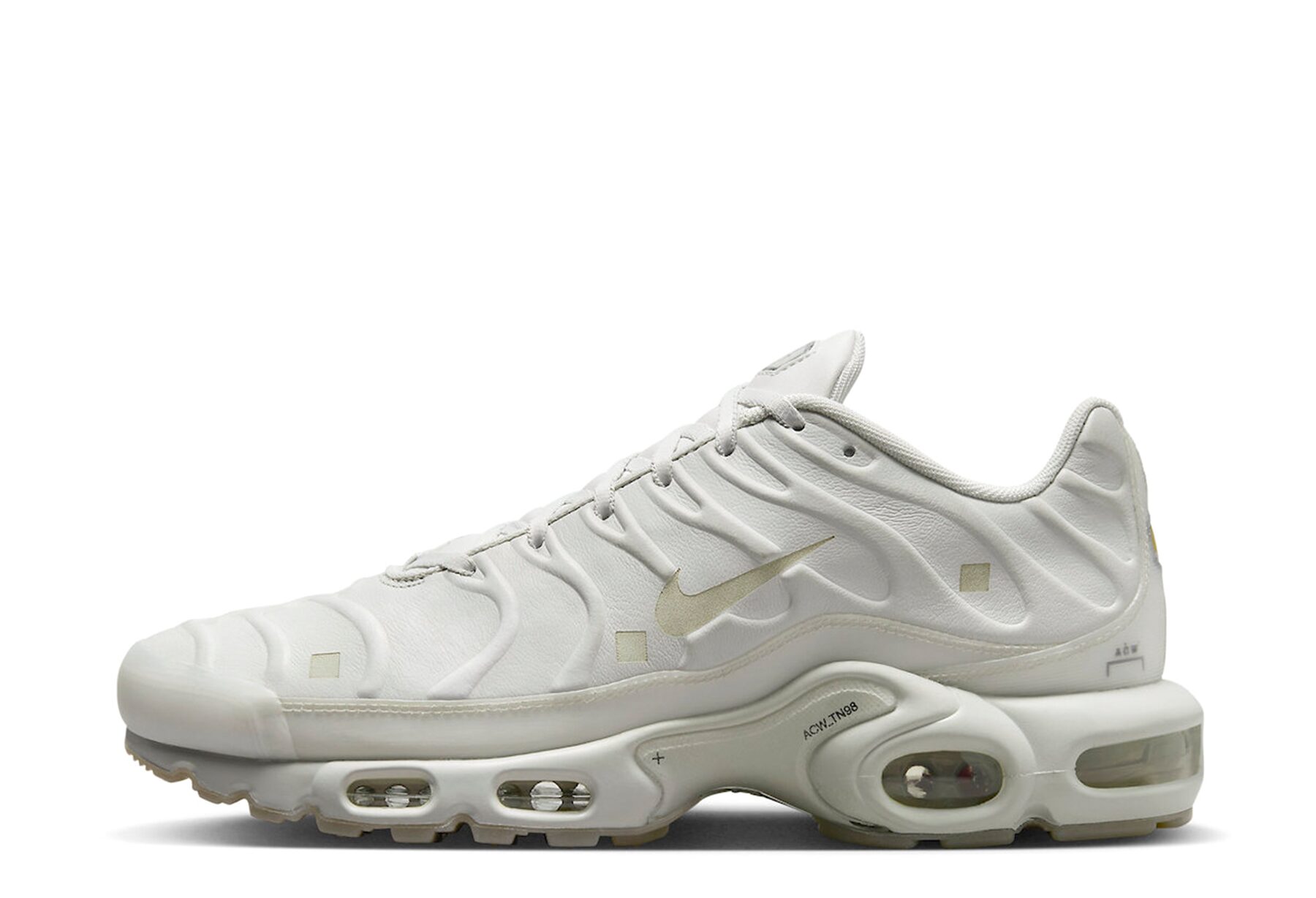
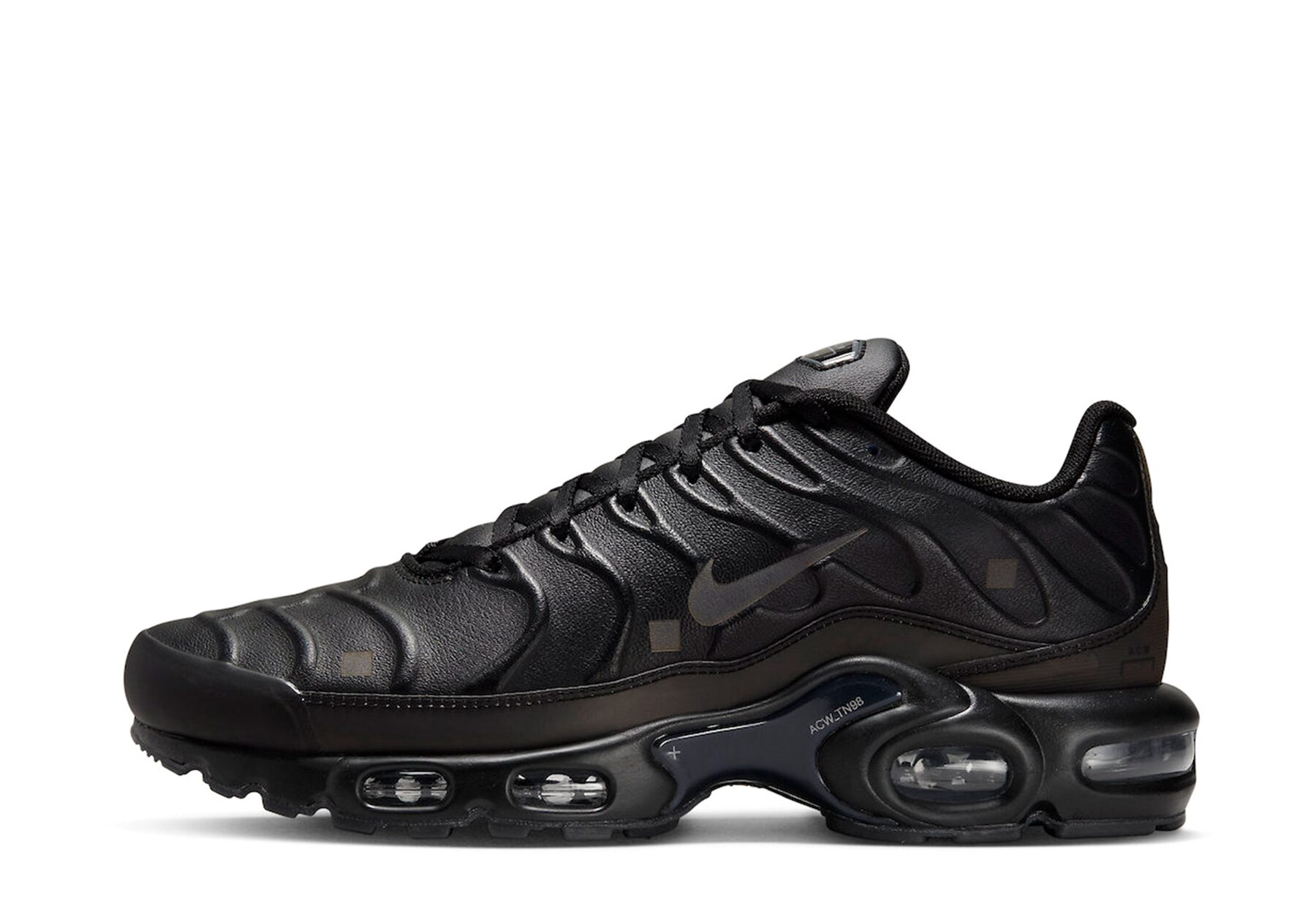
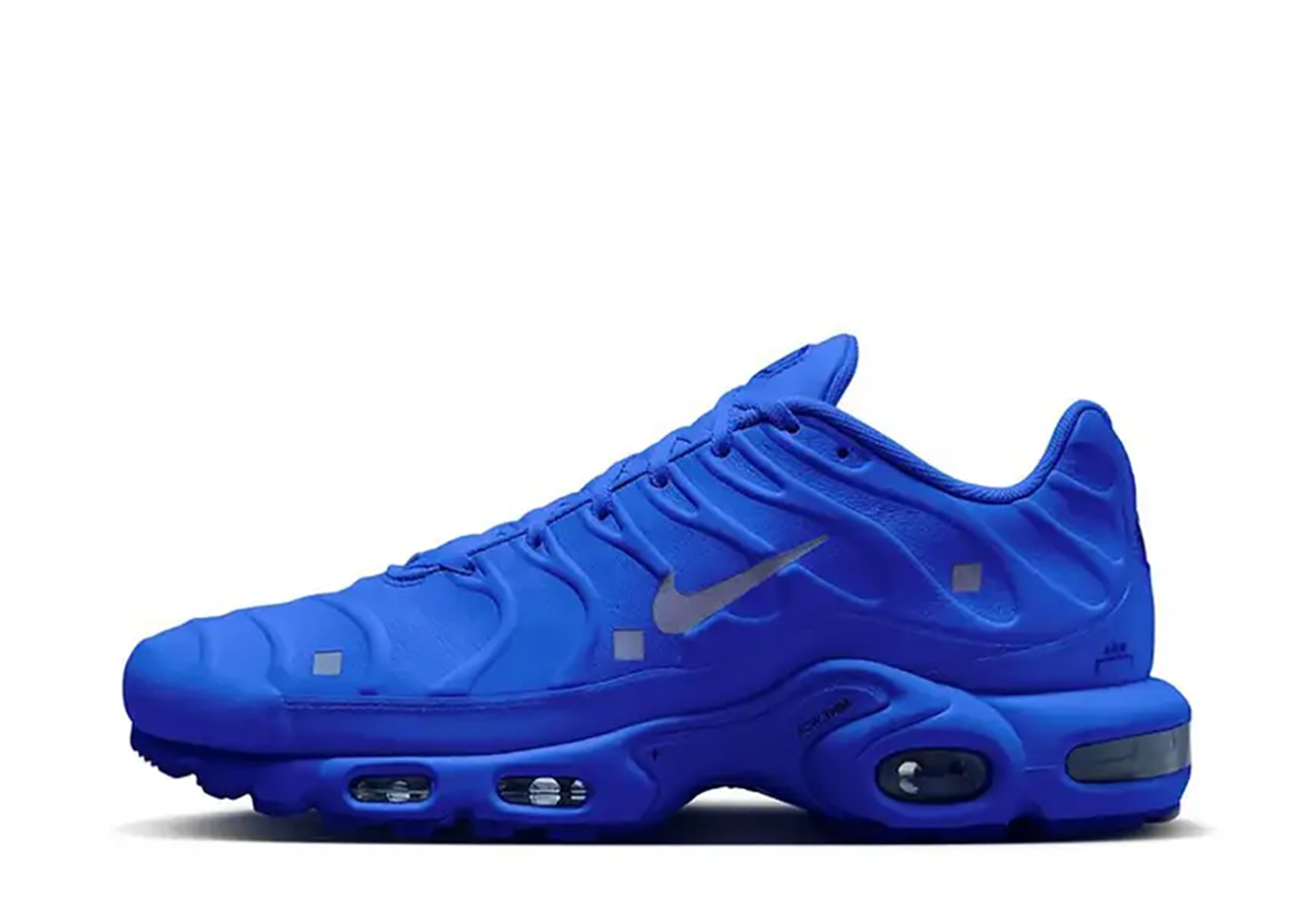
Samuel Ross, founder of A-COLD-WALL*, brought a typically restrained and technical perspective to the TN. The collaboration arrived in three colourways – ‘Black’, ‘Platinum Tint’, and ‘Blue’ – featuring remodelled TPU overlays, leather bases instead of the original mesh, and semi-transparent sections throughout. Ross modified the Nike Air Max logos across the shoe and extended his signature aesthetic to the packaging.
Why the TN Has Never Gone Away
The Air Max Plus has now spent over 25 years in continuous production – rare achievement for any sneaker, let alone one this divisive on arrival. There are a few reasons for that. Technically, the shoe has aged well – the Tuned Air cushioning remains genuinely functional, and the bold silhouette has never felt like a period piece in the way some late-’90s runners have. Culturally, the TN carries real weight; its associations with Australian street culture and working-class identity give it a depth that purely hype-driven sneakers lack. And unlike shoes that only attract attention when they’re rare, the TN has always been accessible, a Foot Locker staple that real wearers could actually get their hands on.
Collaborations with names like Supreme and A-COLD-WALL* have helped the shoe find new audiences without losing its roots. And those roots remain the TN’s greatest asset: a shoe born from a Florida sunset and a rookie designer’s instinct, worn into the ground by people who meant it.