The Ten
In 2017, Virgil Abloh and Nike announced a project that would change the sneaker landscape. The Ten took ten Nike and Jordan silhouettes and ran them through Abloh's process of deconstruction. The collection was split into two groups, 'Revealing' and 'Ghosting', each approaching the originals from a different angle. Among the ten shoes, one stood apart.
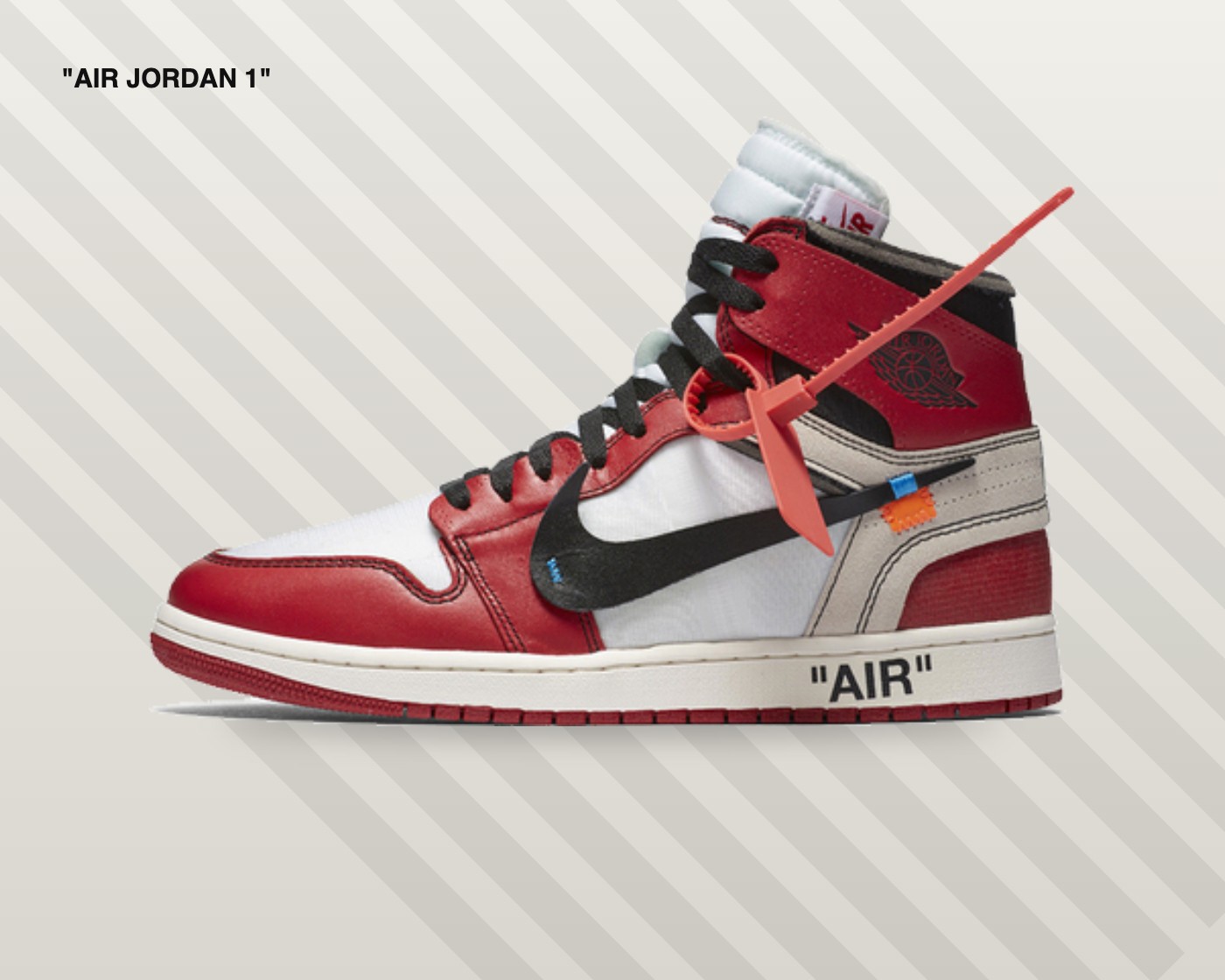
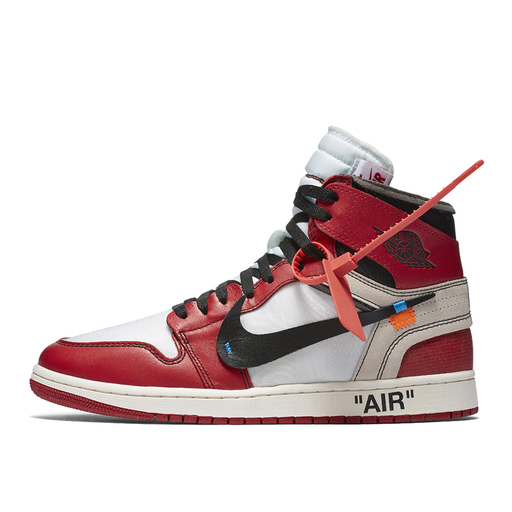
The Air Jordan x Off-White 1 'Chicago' The Ten (2017) was the centrepiece. It was the shoe that people who had never heard of Off-White suddenly wanted, and it proved a designer could take the most recognisable silhouette in basketball and make it feel new.
Updated October 2026
Deconstructing the Air Jordan 1
What Abloh did to the Air Jordan 1 was not a redesign in the usual sense. He kept the shape and proportions and instead pulled the shoe apart and let the seams show. The result looked like a sneaker caught mid-construction, as if someone had stopped the factory line and sent it out unfinished.
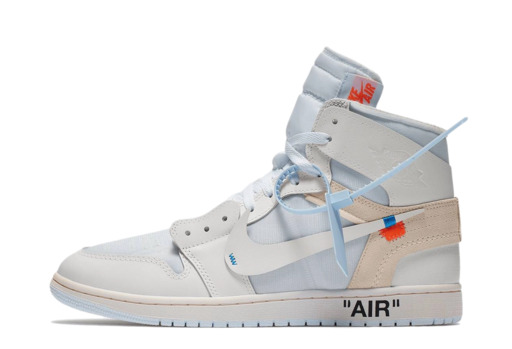
The tongue showed bare foam. Stitching that is normally hidden came to the surface. Text in quotation marks labelled parts of the shoe, like "AIR" on the midsole and "SHOELACES" on the laces, in a typeface that felt more like annotation than branding. The Swoosh was stitched on over the panels rather than built into them, and an orange zip tie hung from the laces.
None of this was accidental. Abloh's background in architecture and his interest in conceptual art shaped the approach. He treated the Air Jordan 1 as a readymade to question rather than a finished product to decorate, and the quotation marks asked whether a thing really is what it claims to be. For the first time, a sneaker asked its wearer to think about the idea behind it.
The Rest of The Ten
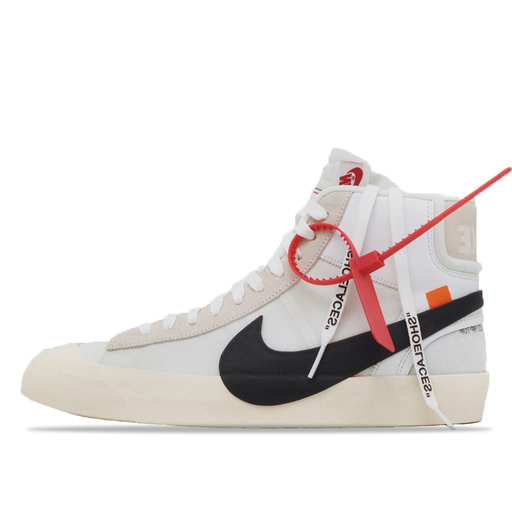
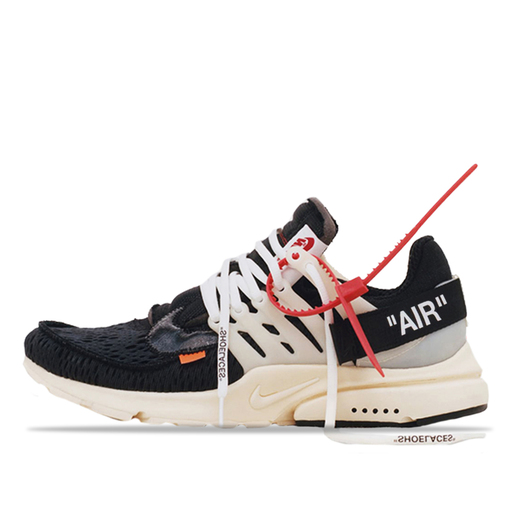
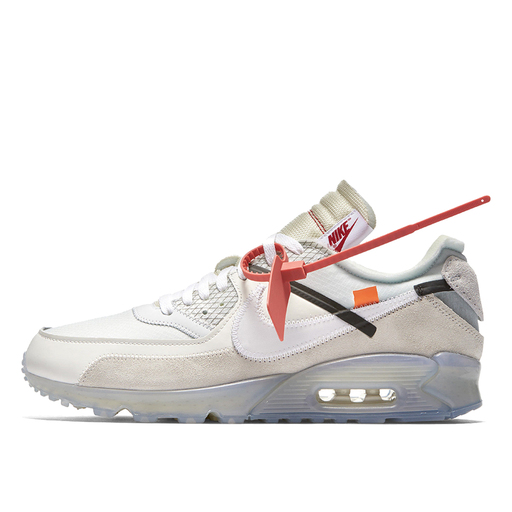
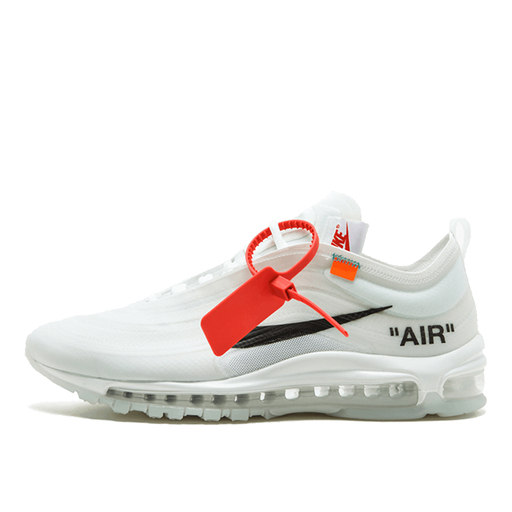
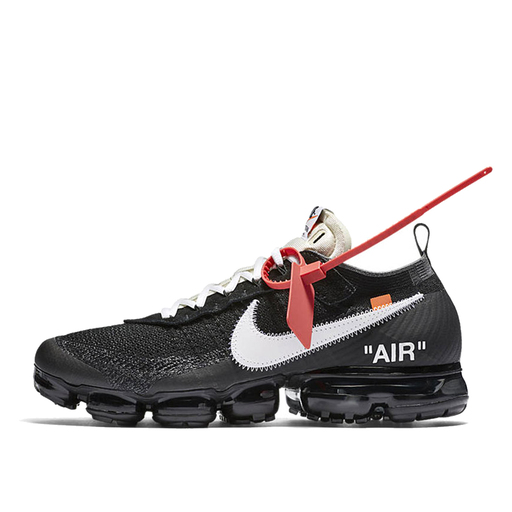
The Air Jordan 1 led the collection, but the other nine shoes were just as important to its impact. The 'Revealing' half, which included the Jordan, the Nike x Off-White Blazer Mid The Ten and the Nike x Off-White Air Presto The Ten (2017), was cut open and rebuilt by hand. The 'Ghosting' half used translucent uppers on shoes like the Nike x Off-White Air Max 97 The Ten (2017).

A Cultural Shockwave
The impact was immediate. Limited quantities and huge demand sent resale prices up from the day of release, and the shoe became the benchmark every later collaboration was measured against.
It also changed what people expected from a collaboration. Before Abloh, most collabs meant a new colourway or a material upgrade. After him, collaborators were expected to bring a point of view. Visible stitching, exposed foam and inside-out branding soon appeared everywhere, sometimes as thoughtful responses and sometimes as surface-level copies.
The 'White' and 'UNC' in 2018
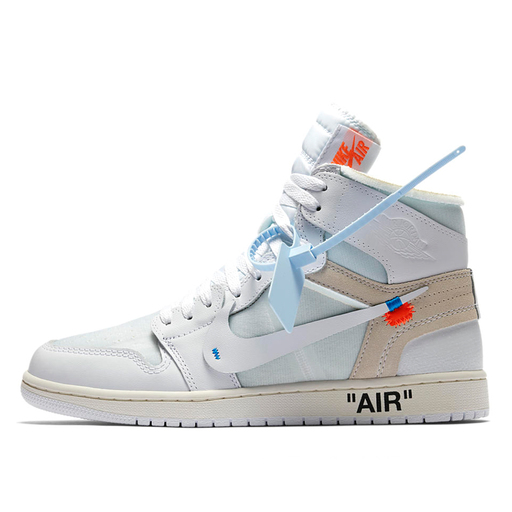
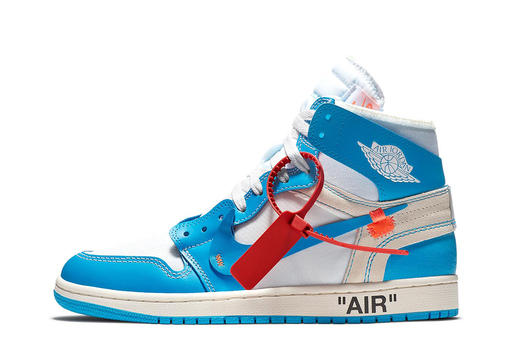
In 2018, Abloh followed the original with two more Air Jordan 1s. The Air Jordan x Off-White 1 Retro High 'White' (2018) arrived first as a Europe-only release, which made it one of the hardest pairs to get. The Air Jordan x Off-White 1 'Powder Blue' (UNC) (2018) followed in powder blue, a softer, quieter take on the same idea and still one of the most sought-after Jordans of its era.
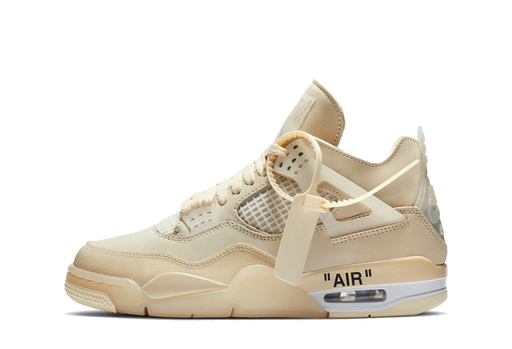
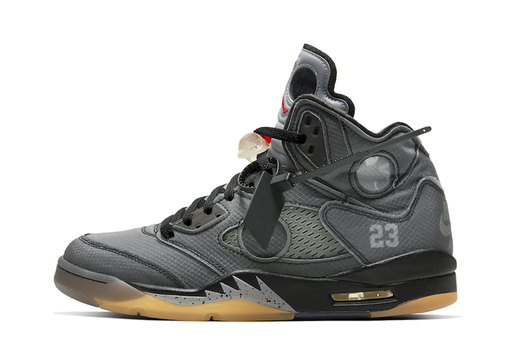
Abloh's Jordan work continued with pairs like the Air Jordan x Off-White 4 WMNS 'Sail' (2020), the Air Jordan x Off-White 5 'Muslin' (2020) and the Air Jordan 2 x Off-White Retro Low SP 'White Red' (2021), while the Nike x Off-White Dunk Low 'Lot 50' (2021) series became one of his biggest Nike projects.


The 'Alaska' and the Virgil Abloh Archive
Virgil Abloh passed away in November 2021, and his work with Nike now continues under the Virgil Abloh Archive. In 2026, the archive released the Air Jordan x Virgil Abloh Archive 1 High OG 'Alaska' (2026), a colourway from the original Air Jordan 1 project that collectors had only known from sample photos. Released under the Virgil Abloh Archive name rather than Off-White, it opened a new chapter for the design and gave a global audience the chance to own it.
The Lasting Impact of Virgil Abloh's Air Jordan 1
Nearly a decade after its debut, the Off-White x Air Jordan 1 remains one of the most influential collaborations of its era. It produced more than a desirable shoe; it introduced a design language that reshaped what the industry expects.
Abloh showed that a sneaker could be a critical object, wearable and intellectual, commercial and conceptual at once. That is what he built with the Air Jordan 1: not just a sneaker, but a new way of thinking about what sneakers can be.
Browse every Off-White release on KLEKT.
Images: Nike / Jordan Brand / KLEKT