

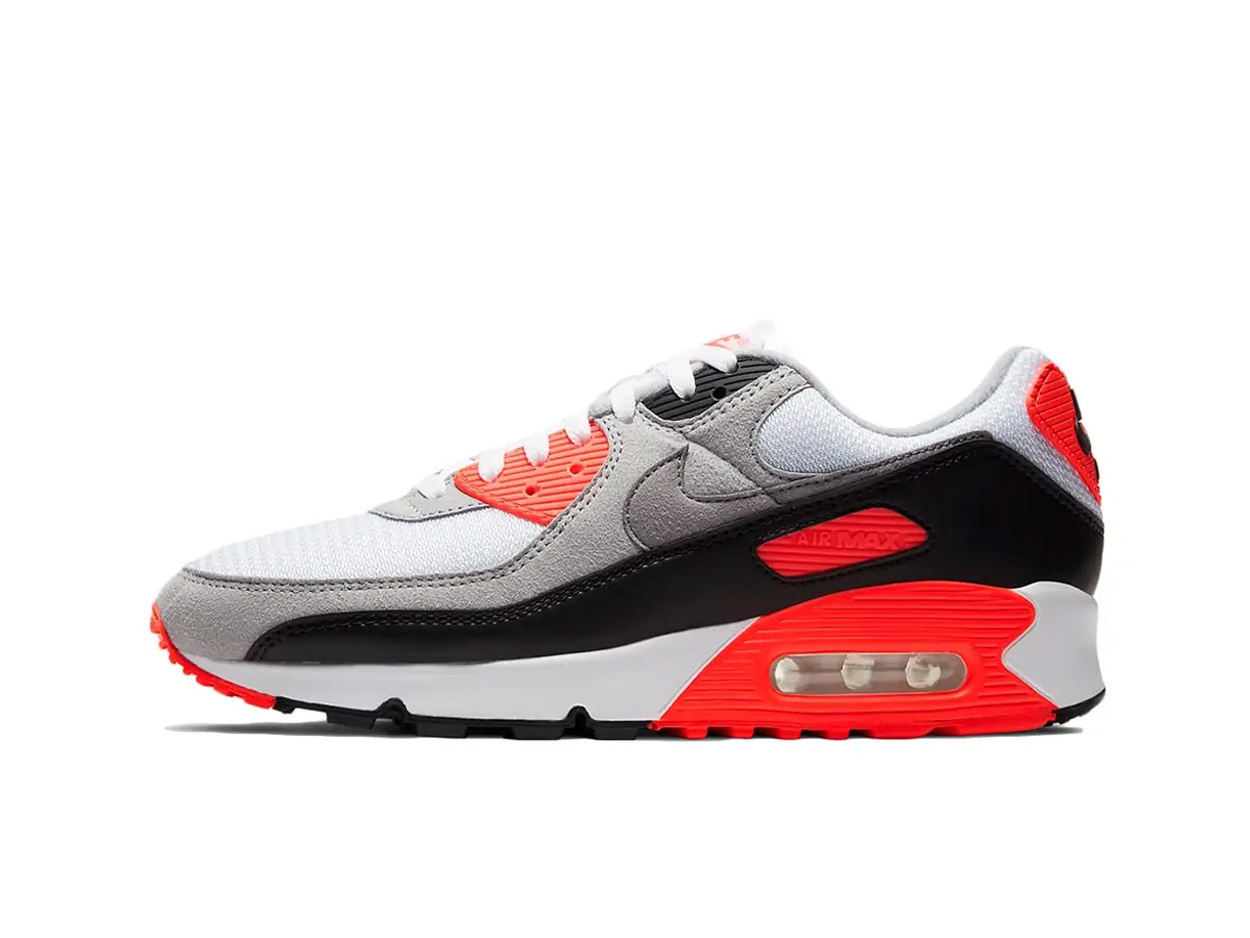
Few sneakers have managed to stay relevant across three decades of shifting trends, subcultural movements, and the relentless churn of new releases. The Nike Air Max 90 is one of them. Since it first hit shelves in 1990, it’s gone from running shoe to rave staple, from grime scene essential to high-fashion grail. In 2025, the AM90 marked its 35th anniversary with its status completely intact. Here’s the full story behind one of Nike’s most iconic silhouettes: where it came from, how it took over, and why it still matters today.
The Design
To understand the Air Max 90, you need to understand the man behind it. Tinker Hatfield – former architect and full-time sneaker legend – had already changed the game with the Air Max 1 in 1987. Inspired by the inside-out architecture of the Centre Pompidou in Paris, he made Nike’s cushioning technology visible for the first time, blowing minds in the process. The Air Max 90 was his third attempt at the Air Max formula, and he had no intention of playing it safe.
Drawing on the Air Max 1 and the 1989 Air Max Light, Hatfield set out to build something that looked faster, more aggressive, and more futuristic than anything before it. The result? A shoe with a dramatically exaggerated midsole, a larger visible Air unit in the heel, thermoplastic polyurethane panel accents, multi-lace ports, and oversized branding throughout.
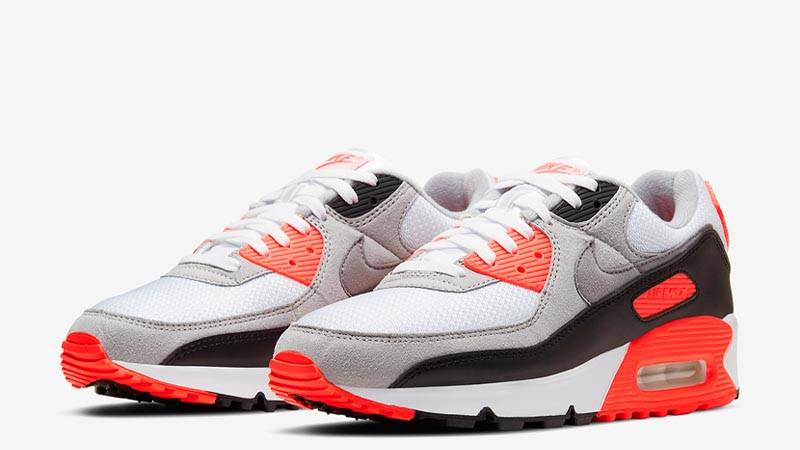
The original colourway featured a vivid shade of red, listed at the time as Hyvent Orange. This would later become one of the most recognisable colours in sneaker history: Infrared. That red-on-grey-on-white combination became so synonymous with the silhouette that it practically defines the shoe’s identity to this day. Originally called the Air Max III, the shoe wasn’t renamed until 2000 when Nike reissued it, giving it the designation it carries now – a nod to the year of its birth.
The Reception
When the Air Max 90 dropped in 1990, sneaker culture was still largely underground. There were no Instagram drops, no SNKRS queues, no resale market to speak of. Word spread through magazines, word of mouth, and the simple act of spotting a pair on someone’s feet. By those standards, the Air Max 90 made serious noise.
The silhouette stood apart from everything else on the market. Its proportions were bolder, its cushioning was visible, and the colourways felt genuinely ahead of their time. For collectors and enthusiasts, it represented a step forward in what a running shoe could look like. Hatfield had essentially created a design language for the Air Max line that would influence every silhouette that followed.
As the years went on and retro culture took hold, the Air Max 90 only grew in stature. By the time Nike began issuing Retros and special editions in the 2000s, demand was through the roof. The Infrared, in particular, had achieved almost mythological status – a colourway so tied to one shoe that it became shorthand for the silhouette itself.
A Global Subcultural Icon
The Air Max 90’s cultural reach goes far beyond sport. Across different scenes and different countries, the shoe found a home in some of the most influential subcultures of the past 35 years.
UK Rave and Acid House
When the Air Max 90 launched, the UK was deep in a house music revolution. British ravers quickly adopted the shoe as their own, pairing it with tracksuits and embracing its cushioned sole as the perfect companion for dancing through the night. That underground credibility became part of the shoe’s DNA. It wasn’t a mainstream consumer product to these communities , it was part of an unofficial uniform.
UK Grime
Fast-forward to the early 2000s, and the Air Max 90 found a second wind through the emergence of grime. Artists like Dizzee Rascal, Wiley, and Kano brought tracksuits and trainers back to the forefront of British culture, rejecting the designer-label excess of garage in favour of street-level authenticity. The whole Air Max range was right at the centre of that aesthetic shift. When grime experienced its next major revival in the 2010s, the AM90 came with it.
Japan and Global Streetwear
Japan’s relationship with Nike and the Air Max 90 deserves its own chapter. Japanese sneaker culture – obsessive, precise, and fiercely independent – embraced the AM90 as a canvas for experimentation. That connection produced some of the most sought-after collaborations in the shoe’s history, with Japanese brands and retailers leaving an indelible mark on the silhouette’s legacy.
Key Collaborations
The Air Max 90’s collaborations read like a hall of fame for sneaker creativity. Here are some of the most important:
DQM x Nike Air Max 90 ‘Bacon’ (2004/2021)
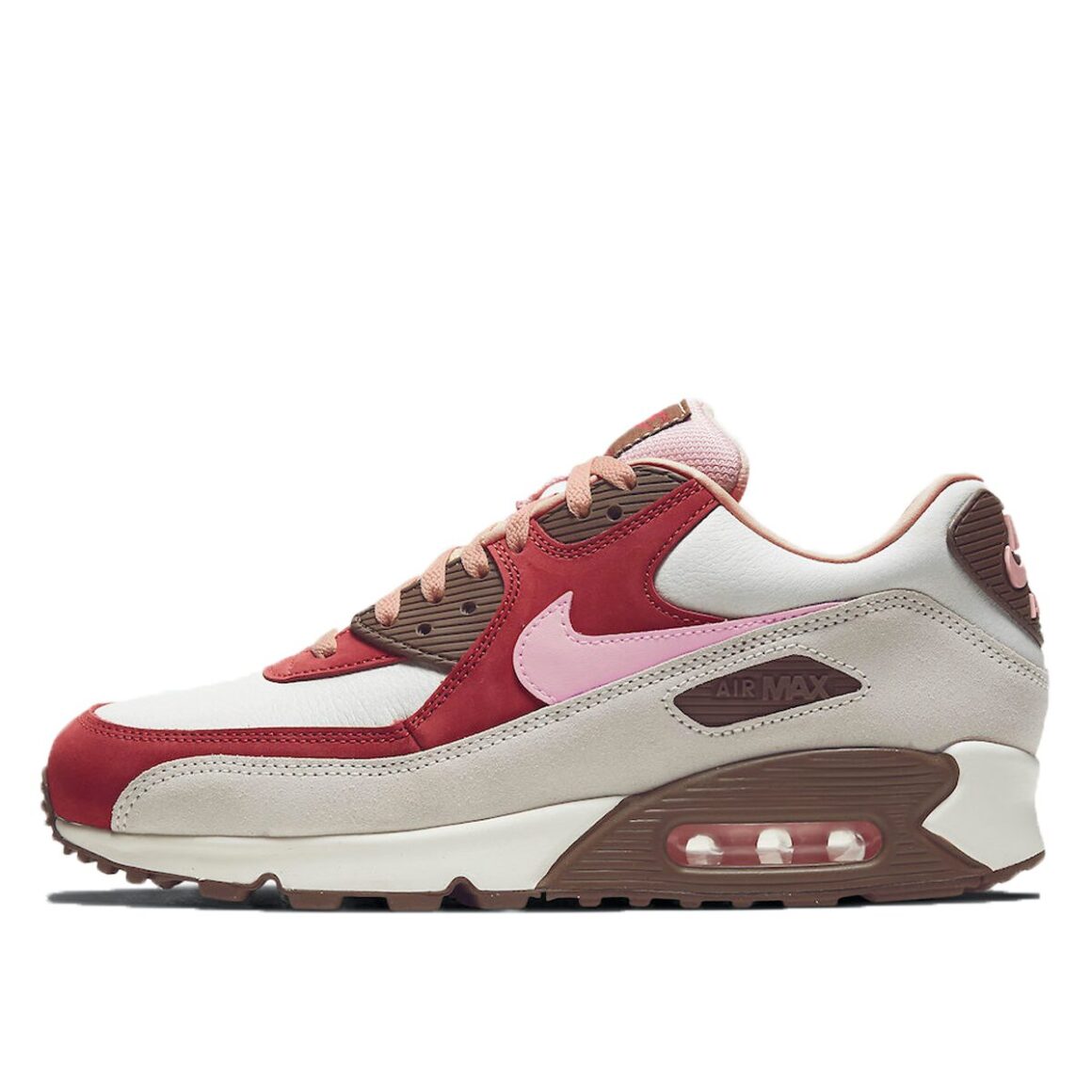
Created with New York boutique Dave’s Quality Meats, the Bacon colourway took the AM90 somewhere nobody expected. A mix of red, pink, and brown tones mimicked the look of crispy bacon, and the result was an instant cult classic. It was eventually retroed in 2021, cementing its legacy for a new generation.
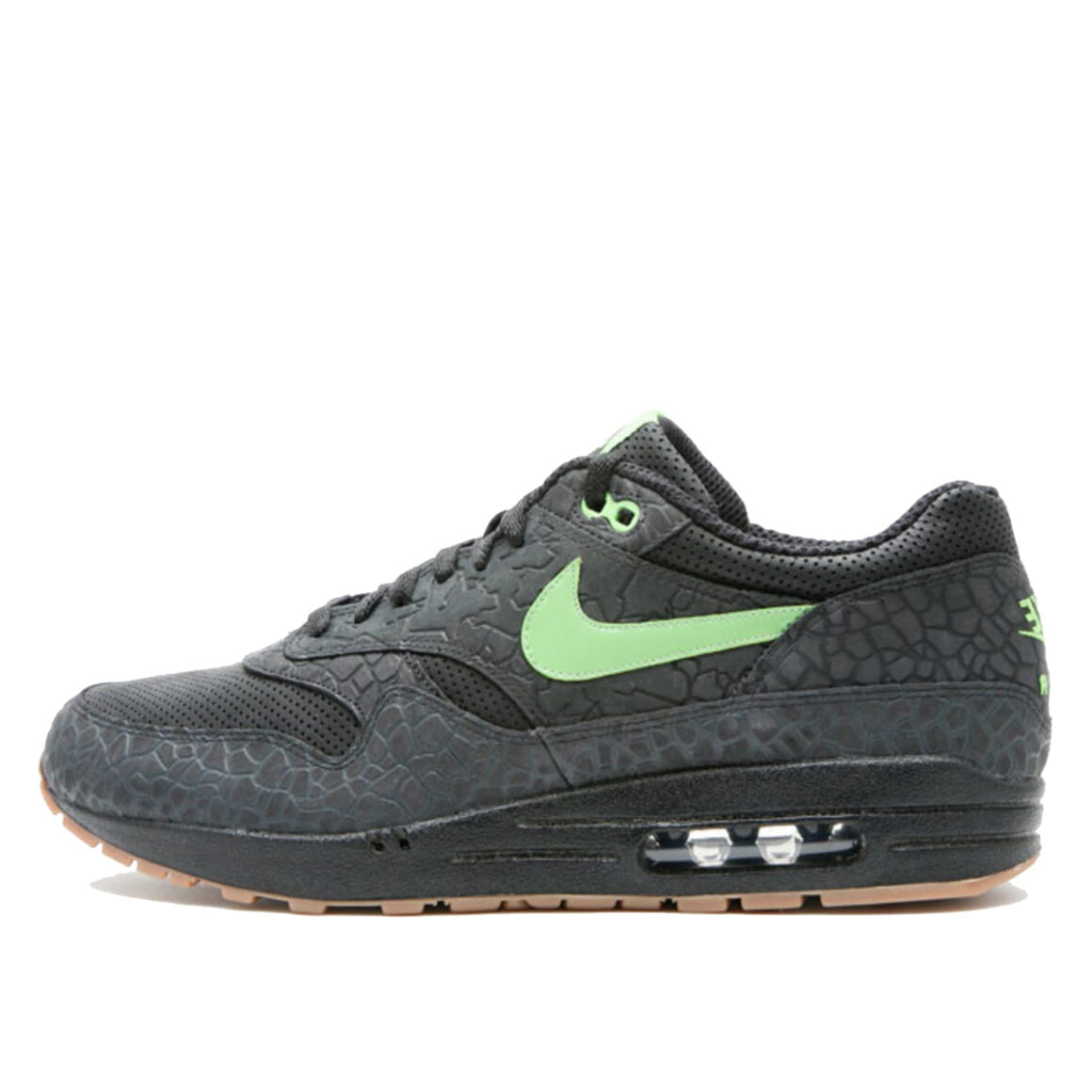
San Francisco skate shop HUF brought the AM90 into skate culture with a “cracked earth” print covering the entire upper. A bold, textured take that showed the silhouette’s versatility beyond running and lifestyle.
atmos x Nike Air Max 90 ‘Duck Camo’ (2013)
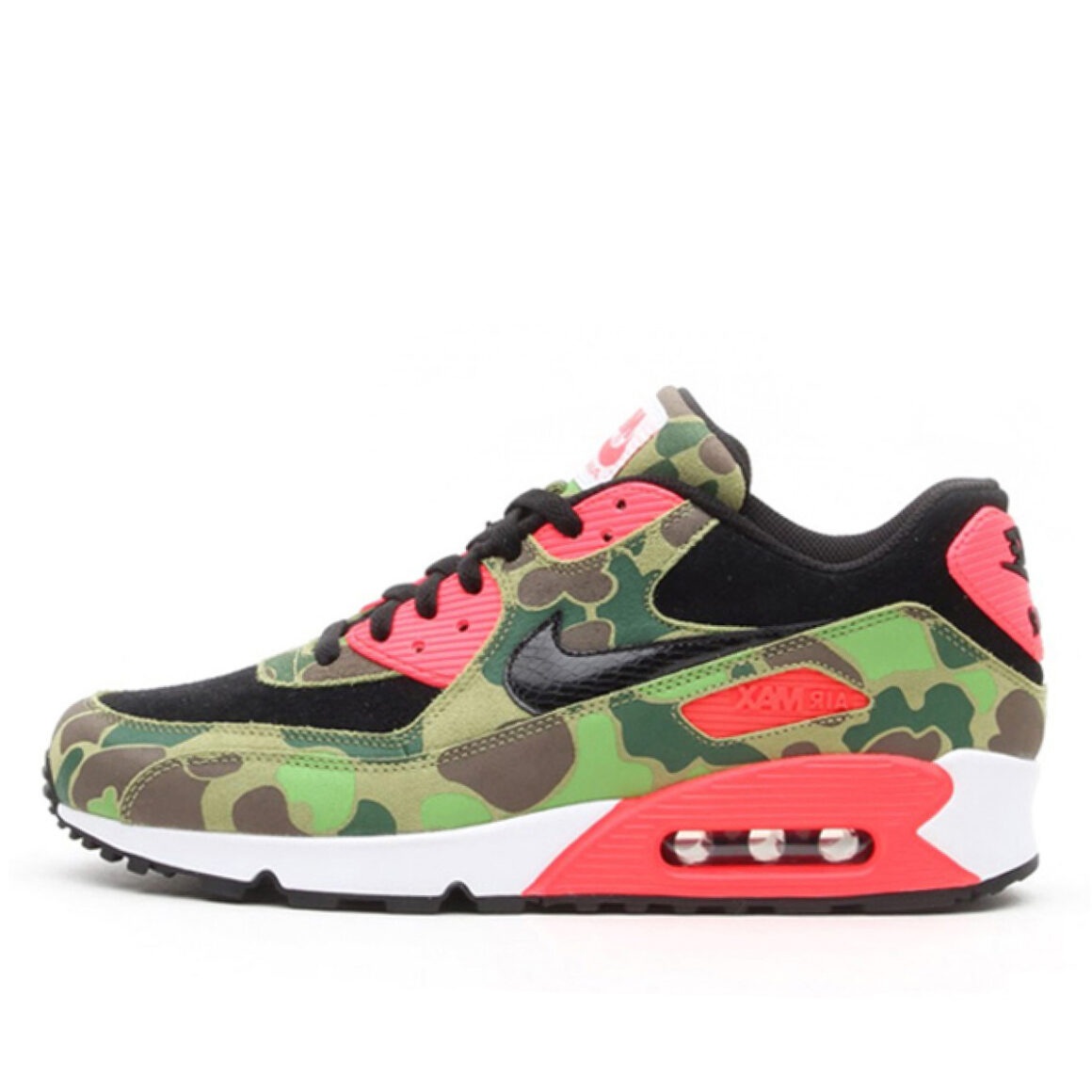
Japanese retailer atmos wrapped the AM90 in a full camouflage print, creating one of the most coveted sneakers in the collaboration’s history. Released in October 2013, it remains a grail piece for AM90 collectors worldwide.
sacai x Nike Air Max 90 (2015)
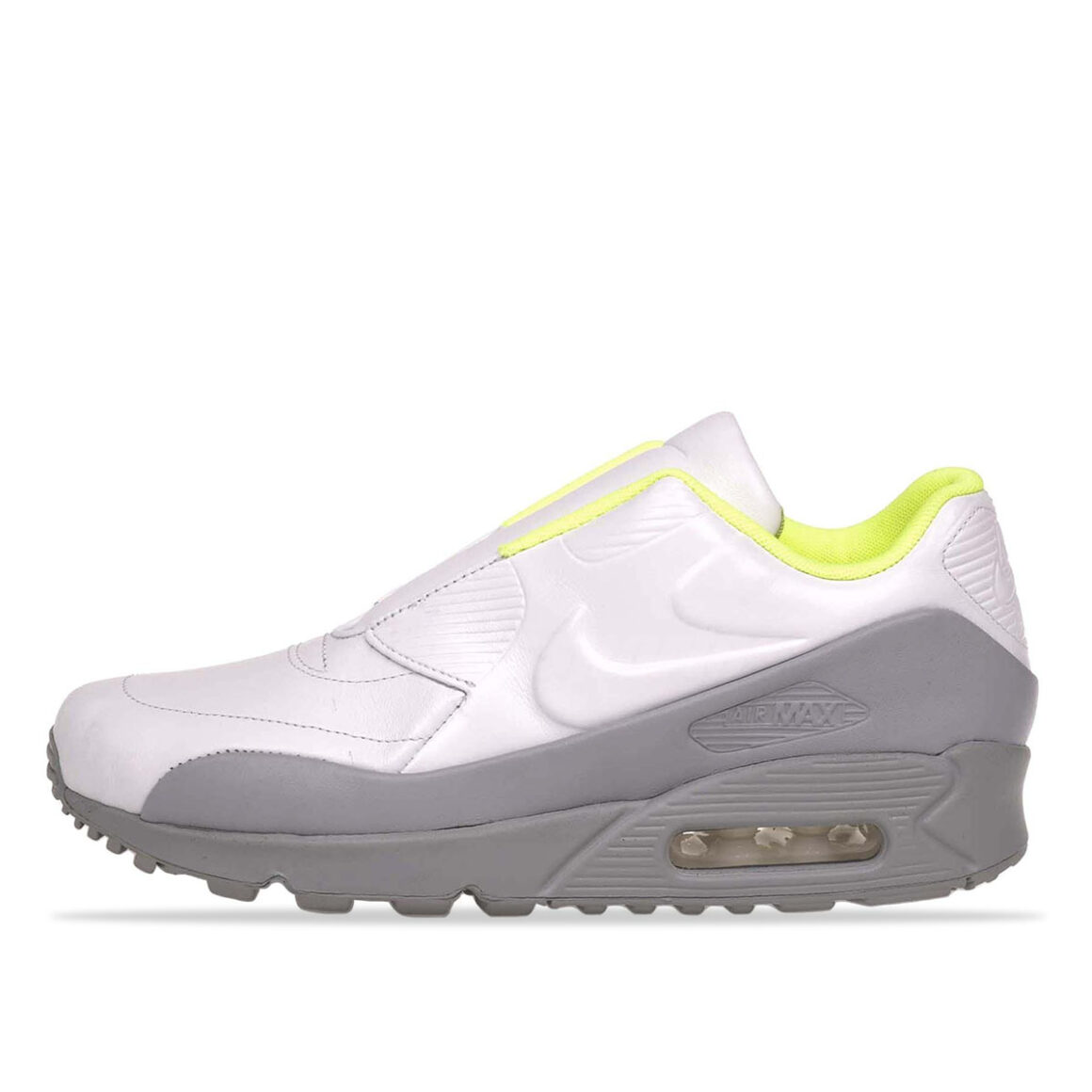
Chitose Abes’s Japanese fashion house sacai took a more conceptual approach, releasing a laceless version that brought high fashion and streetwear together in a way that only sacai could.
Off-White x Nike Air Max 90 ‘The Ten’ (2017)
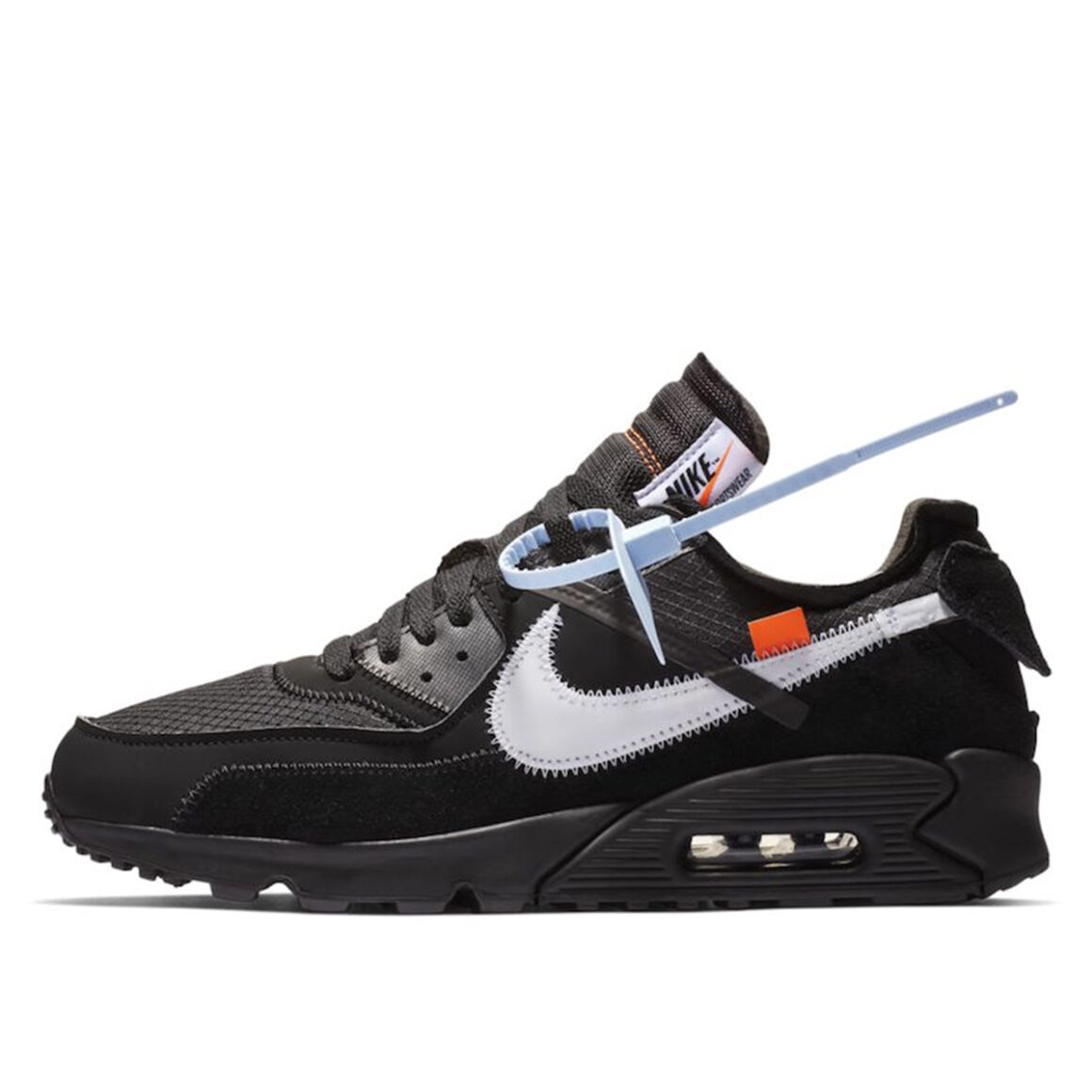
Virgil Abloh’s contribution to the AM90’s history may be its most talked-about chapter. As part of his landmark ‘The Ten’ collection, a deconstruction of ten iconic Nike and Jordan silhouettes, Abloh exposed the inner workings of the shoe and celebrated its construction. Transparent overlays, exposed stitching, and his signature tongue-in-cheek Helvetica text (“SHOELACES”, “AIR”) gave the AM90 a deconstructed, DIY feel that was entirely new. The initial Sail colourway released in 2017, with Black and Desert Ore versions following in 2019. All three remain among the most valuable AM90 collaborations ever made.
35 Years of the Air Max 90
2025 marked 35 years since the Air Max III first landed on shelves. That’s three and a half decades of influence across running tracks, raves, record covers, and runways. For a shoe that was built to perform, its cultural impact has always overshadowed its athletic credentials.
What makes the Air Max 90 different from most sneakers of its era is that it never really needed a revival. While many classics go dormant before a big Retro moment brings them back, the AM90 has remained a consistent fixture in Nike’s lineup. It’s been reissued, reworked, collaborated on, and reimagined countless times, but the core design has never felt dated.
That’s the testament to Hatfield’s original vision. The proportions, the panel structure, and the visible Air unit all come together to form a silhouette that works across decades and subcultures without ever losing its identity. As Esquire put it: “It’s exaggerated but elegant, like an Italian supercar for your feet.”
The AM90 Today
Thirty-five years on, the AM90 continues to be one of Nike’s most versatile and consistently popular silhouettes. New colourways arrive regularly. Retros of legendary colourways – including the Infrared – continue to generate serious demand. And with each anniversary milestone, Nike has used the AM90 as a platform to push design innovation further.
On the resale market, rare collaborations and OG-inspired colourways hold strong value. Pairs like the Off-White collabs and the atmos Duck Camo command serious premiums, while general release Infrafed retros give collectors an accessible entry point into the shoe’s history.
A Legacy
The Nike Air Max 90 is one of the rare sneakers that has earned its place in multiple eras. Not through constant reinvention, but through the sheer strength of its original design. It launched with a design that looked like the future, found its way into scenes that defined entire generations, and inspired collaborators who changed what a sneaker collaboration could be.
Check out the full range of Air Max 90s available on KLEKT