

If there’s one sneaker that perfectly captures the intersection of streetwear, luxury, and cultural storytelling, it’s Virgil Abloh’s Air Jordan 1. Released in 2017 as part of ‘The Ten’, the late legend Abloh didn’t just redesign a classic silhouette, he deconstructed and recontextualised it, and in doing so, completely reshaped the way we think about one of the most important sneakers of all time.
To understand the significance of this shoe, you have to start with the original Air Jordan 1. First released in 1985, it wasn’t just a basketball sneaker, it was a disruptor that seemed to predict MJ’s trail before he blazed it. Fast forward three decades, and the silhouette had already been retroed countless times. It was iconic, of course, but it was also pretty familiar. It felt like the AJ1 already came in every colour under the sun. That’s where Abloh stepped in.
Rather than reinventing the wheel, Abloh approached the Air Jordan 1 with a philosophy rooted in architecture and design theory: the idea that even the most recognisable objects can be transformed through subtle shifts in context. His approach? Deconstruction. Strip the shoe back to its raw components, expose its inner workings, and then rebuild it in a way that feels both unfinished and intentional.
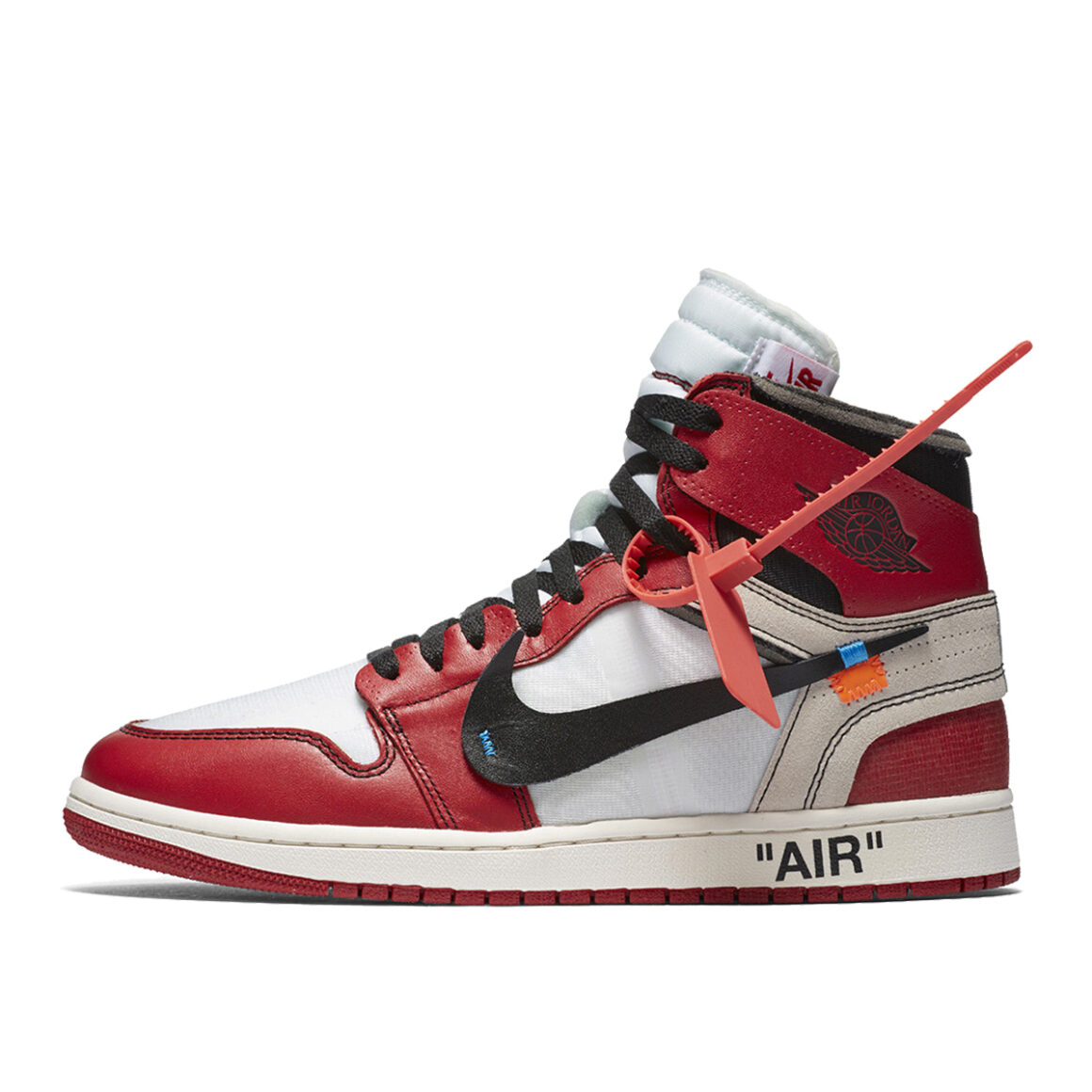
The result was the Air Jordan 1 ‘Chicago’ from The Ten collection – a sneaker that looked like it had been taken apart and reassembled mid-process. Exposed foam, visible stitching, oversized Swooshes, and that now-signature zip tie all became defining features. It wasn’t about perfection; it was about process.
What made Abloh’s design so compelling was its balance between reverence and rebellion. He didn’t ignore the legacy of the Air Jordan 1, he amplified it. The classic Chicago colourway remained intact, anchoring the design in its heritage. But layered on top were elements that challenged traditional notions of what a finished sneaker should look like.
Take the text, for example. “AIR” printed in quotation marks on the midsole. “SHOELACES” stamped on the laces. These weren’t just aesthetic choices made for the hell of it, Abloh was playing with semiotics, forcing wearers to reconsider the meaning of everyday design elements. It was ironic, self-aware, and unmistakably Off-White.
And then there’s the zip tie. Initially seen as a novelty, it quickly became a symbol of authenticity and identity. Some kept it on, others took it off. Either way, it sparked conversation. That’s the thing about Abloh’s work: it invites participation. It’s not just something you wear; it’s something you engage with.
From a craftsmanship standpoint, the sneaker also stood out. Premium materials, layered construction, and a deliberately raw finish gave it a tactile quality that felt both luxurious and experimental. It blurred the line between prototype and product, something Abloh would continue to do throughout his career.
But beyond the design itself, the release strategy played a huge role in cementing the shoe’s legacy. Limited quantities, high demand, and a perfectly timed rollout turned The Ten into one of the most talked-about sneaker drops of the decade. It wasn’t just hype, it was a moment. A cultural reset.`
Resale prices skyrocketed almost instantly, and the Air Jordan 1 became the crown jewel of the collection. Before the pandemic boom, Dunks and Travis Scott, one design completely shifted the scene. It wasn’t just another collab; it was a statement. A signal that the rules of sneaker design and sneaker culture had changed.
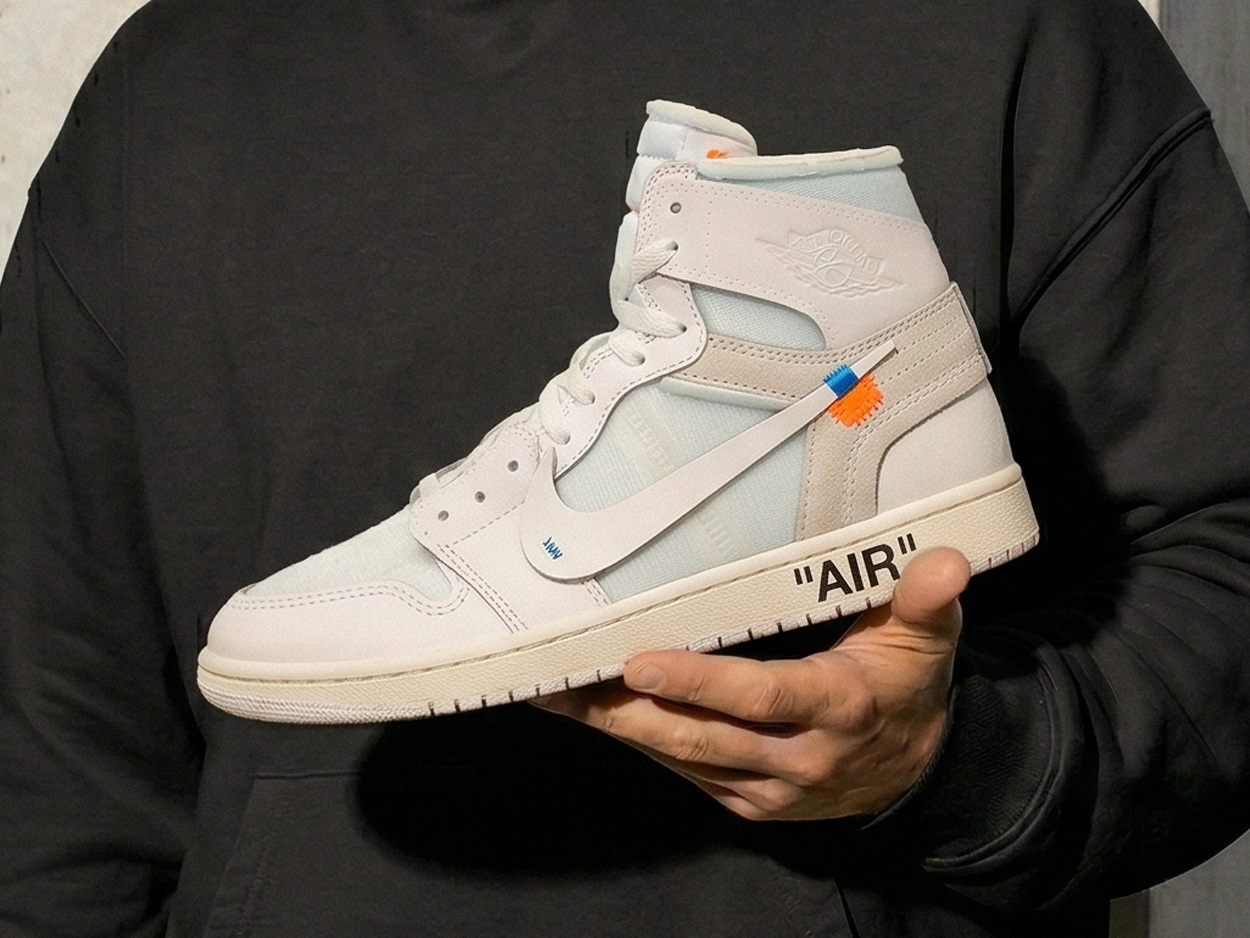
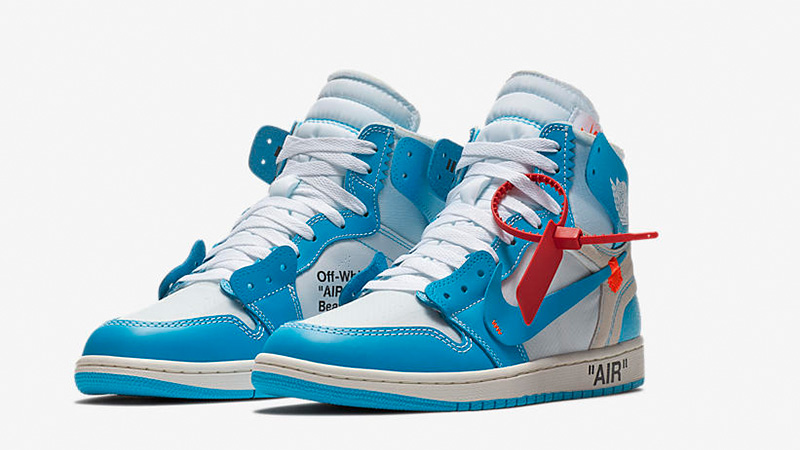
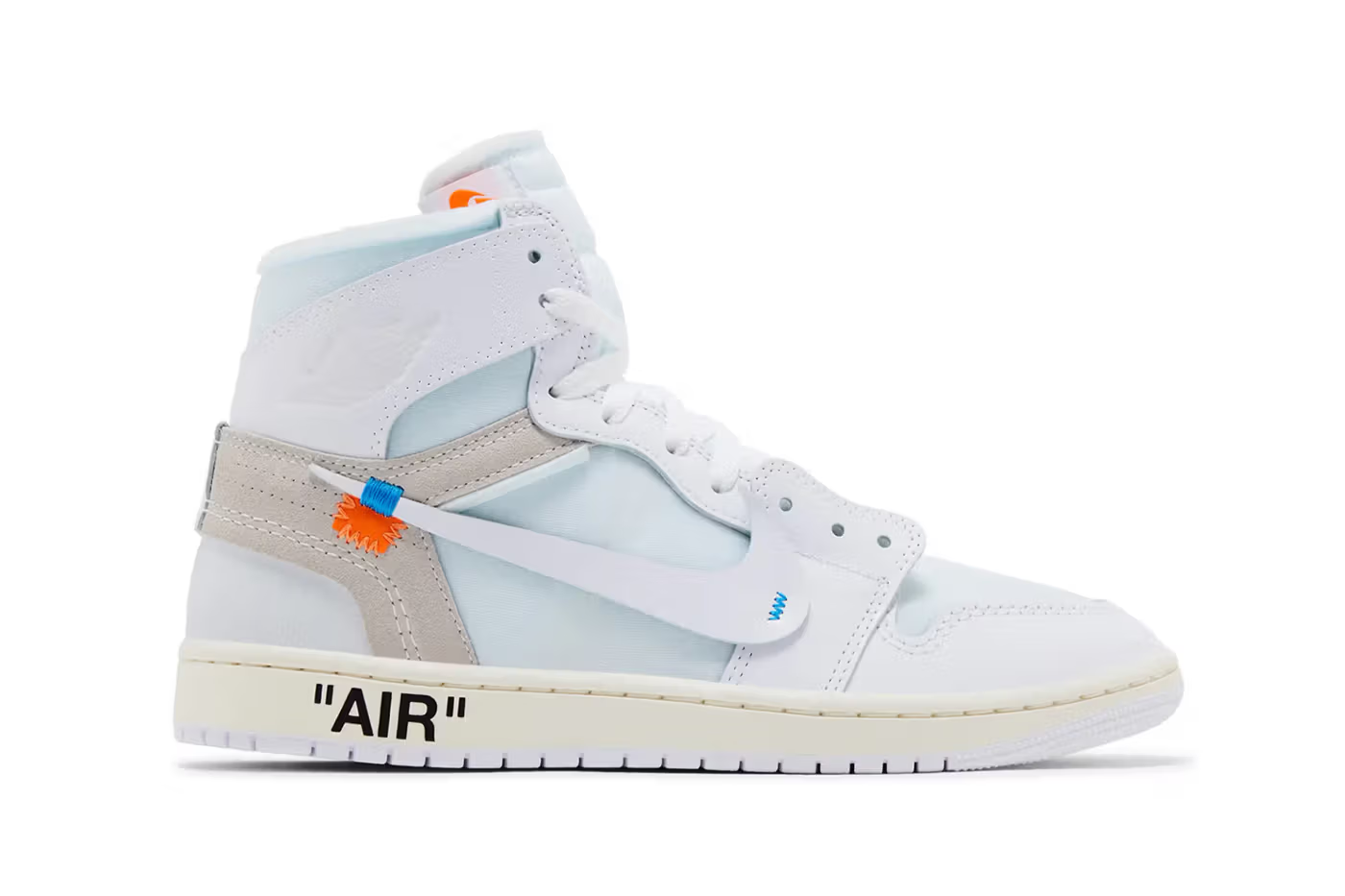
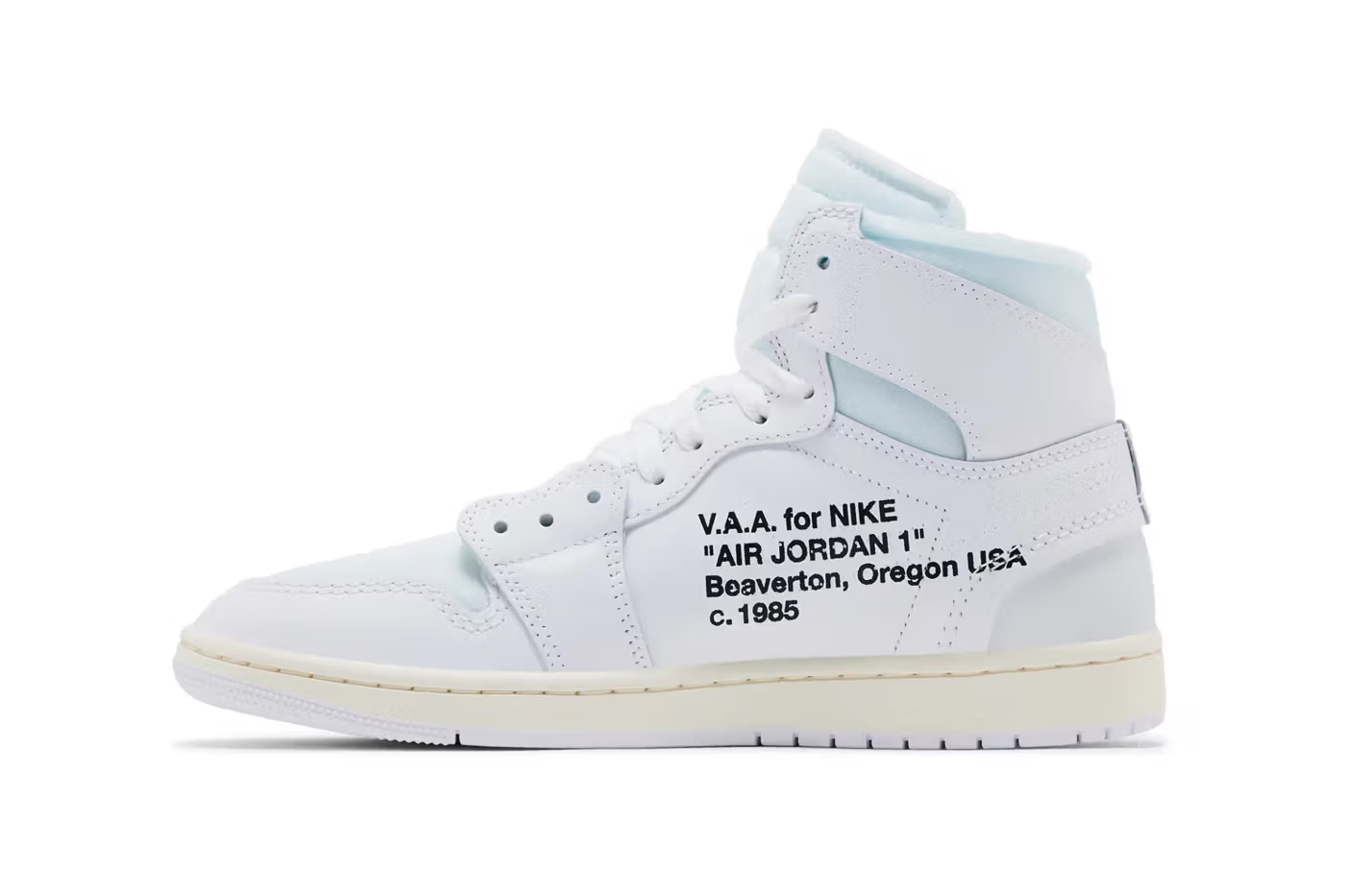
Virgil would also revisit the Jordan 1, following up on the Chicago in 2018 with a pair of deconstructed powder-blue UNCs. There was also a European-exclusive triple-white pair, released the same year. This pair would later be known as the ‘Alaska‘, rereleased in 2026 by the Virgil Abloh Archive.
What’s particularly interesting is how the design has aged. Nearly a decade on, it still feels fresh. That’s rare in a space driven by trends and rapid cycles. The reason? Abloh wasn’t chasing trends but questioning them. By exposing the construction and embracing imperfection, he created something timeless in its own unconventional way.
The influence of this design can’t be overstated. Since its release, we’ve seen a wave of deconstructed aesthetics across the industry. Visible stitching, exposed foam, and inside-out branding. That’s the mark of true innovation: when the industry catches up to your vision.
Of course, not everyone got it at first. Some saw it as unfinished, and overhyped. But you could argue that anything that gets any attention is “overhyped”. Besides, that initial scepticism only adds to the story. Like many great designs, it challenged expectations and sparked debate. And in doing so, it pushed the culture forward.
It’s worth remembering that the value of a sneaker isn’t just in its price tag, it’s in its story – which might sound a little weird coming from a resale site, but its true. And the story behind Virgil Abloh’s Air Jordan 1 is one of disruption, creativity, and a relentless desire to see things differently.
It’s a reminder that even the most iconic designs aren’t untouchable. Sometimes, all it takes is a fresh perspective – and a willingness to take things apart – to create something entirely new. And that’s exactly what Virgil did.